 ChipApex | Global Electronic Components Supplier
SEARCH
Search Product
Search Post
— IC芯片 | 连接器 | 传感器 | 被动器件 —
Search productSearch post
— IC芯片 | 连接器 | 传感器 | 被动器件 —
Consult the customer manager about the wholesale price.
consultation hotline:86-132-6715-2157
email:[email protected]
Contact the product manager for consultation. One-stop consultation is available.
Do you want a lower wholesale price? Please send us your inquiry and we will reply immediately.
The 0ZAF0013FF28 is a polymeric positive temperature coefficient (PTC) resettable fuse from Bel Fuse Inc., designed for surface mount applications in the 2920 (7351 Metric) case size. It features a maximum holding current (Ih) of 130 mA and a trip current of 320 mA, with a maximum voltage rating of 240V AC (250V DC). The device offers a maximum fault current of 1.2 A and is qualified to the AEC-Q200 automotive standard. It provides protection against overcurrent and short-circuit conditions while maintaining compliance with RoHS directives.
Verify that the required holding current of 130 mA aligns with the circuit's normal operating current to prevent nuisance tripping. Confirm the 240V AC / 250V DC voltage rating exceeds the system's maximum potential. Ensure the PCB footprint matches the 2920 case dimensions and accounts for the concave profile. Validate that the 1.2 A maximum fault current capability is sufficient for the expected short-circuit levels in the application.
Select this component when an automotive-qualified, surface-mount resettable fuse is required for high-voltage applications. The 130 mA holding current suits low-power signal or control lines rather than high-current power rails. Consider the 2920 package size for space-constrained boards where standard axial leads are impractical. The AEC-Q200 certification makes it suitable for automotive OEM specifications requiring strict reliability standards.
This part belongs to the 0ZAF series of line voltage rated PTC resettable fuses by Bel Fuse Inc. The series is engineered for surface mount integration, offering a compact alternative to traditional axial fuses. The 0ZAF series specifically targets applications demanding higher voltage ratings and automotive reliability, combining polymer technology with robust fault protection capabilities.
Direct substitutes must match the 130 mA holding current, 240V AC rating, and 2920 SMD package. Verify equivalent AEC-Q200 qualification if automotive use is mandated. Cross-reference trip current and max fault current limits to ensure identical protection characteristics without derating issues.
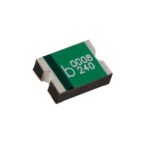 0ZAF0013FF28
The activity of extra discounts on wholesale prices is in full swing…
Please fill in your contact information and we will send you the latest wholesale price list.





