 ChipApex | Global Electronic Components Supplier
SEARCH
Search Product
Search Post
— IC芯片 | 连接器 | 传感器 | 被动器件 —
Search productSearch post
— IC芯片 | 连接器 | 传感器 | 被动器件 —
Consult the customer manager about the wholesale price.
consultation hotline:86-132-6715-2157
email:[email protected]
Contact the product manager for consultation. One-stop consultation is available.
Do you want a lower wholesale price? Please send us your inquiry and we will reply immediately.
The onsemi 100324QI is a low-power hex TTL-to-ECL translator housed in a 28-lead Plastic Lead Chip Carrier (PLCC) package. It converts standard or Schottky TTL logic levels to 100K ECL logic levels, featuring differential outputs for use as line drivers or inverters. The device includes voltage compensation over the -4.2V to -5.7V VEE range and offers 2000V ESD protection. It operates within an industrial temperature range of -40°C to +85°C and maintains pin and function compatibility with the 100124 while reducing power dissipation by approximately 50%.
Verify that the specific procurement requirement aligns with the industrial temperature grade (-40°C to +85°C), as commercial variants exist. Confirm the 28-lead PLCC package form factor matches the design footprint. Note that this component is manufactured under Fairchild Semiconductor specifications now managed by onsemi; ensure documentation references DS009878 for accurate electrical characteristics and absolute maximum ratings during integration.
Select the 100324QI when system cooling constraints require lower power dissipation than the legacy 100124 model. Ensure the application utilizes differential signaling to leverage the device's high common mode rejection capabilities against ground potential differences. Verify that input signals conform to standard or Schottky TTL voltage levels and that the ECL supply voltage remains within the specified -4.2V to -5.7V window for proper output level compensation.
This component belongs to the 100-series logic family, specifically designed for interface translation between TTL and ECL domains. The 'QI' suffix denotes the 28-lead PLCC package variant available in the industrial temperature grade. It serves as a direct functional replacement for the 100124 in designs prioritizing thermal management without sacrificing AC performance or pinout compatibility.
The 100124 is the primary compatible predecessor. The 100324QI offers identical pin and function compatibility with the 100124 but provides approximately half the power dissipation. No other direct substitutes are documented in the provided datasheet.
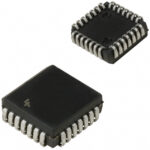 100324QI
The activity of extra discounts on wholesale prices is in full swing…
Please fill in your contact information and we will send you the latest wholesale price list.





