 ChipApex | Global Electronic Components Supplier
SEARCH
Search Product
Search Post
— IC芯片 | 连接器 | 传感器 | 被动器件 —
Search productSearch post
— IC芯片 | 连接器 | 传感器 | 被动器件 —
Consult the customer manager about the wholesale price.
consultation hotline:86-132-6715-2157
email:[email protected]
Contact the product manager for consultation. One-stop consultation is available.
Do you want a lower wholesale price? Please send us your inquiry and we will reply immediately.
The Fairchild Semiconductor 100328PC is a low-power octal ECL/TTL bi-directional translator housed in a 24-pin DIP package. It facilitates signal translation between TTL and ECL logic families, supporting bidirectional data flow across eight channels. The device operates within a temperature range of -40°C to 85°C and features three-state outputs for bus isolation. Designed for mixed-signal applications, it ensures compatibility between different voltage levels while maintaining low power consumption characteristics typical of its series.
Verify the specific datasheet version for the 100328PC to confirm pinout compatibility and electrical specifications against your system requirements. Ensure that the supplier provides documentation confirming the component's origin from Fairchild Semiconductor or authorized successors. Check for any obsolescence notices or lifecycle status updates prior to procurement to ensure long-term availability for production needs.
Select this component when bidirectional translation between TTL and ECL levels is required in an octal configuration. Consider the 24-pin DIP package for through-hole mounting constraints. Evaluate the operating temperature range to ensure suitability for the intended environmental conditions. Verify that the low-power characteristic aligns with the thermal management strategy of the target application board.
The 100328PC belongs to Fairchild Semiconductor's family of level translators designed for bridging incompatible logic families. It serves as a critical interface component in systems where TTL and ECL technologies coexist. The device simplifies system integration by eliminating the need for discrete translation circuits, thereby reducing board space and complexity in mixed-signal digital designs.
Consult official replacement guides for equivalents such as the 100328QI or other octal translators from compatible manufacturers. Verify pin-to-pin compatibility and electrical parameter alignment before substitution. Ensure that any alternative part maintains the same bidirectional functionality and package type if mechanical constraints are fixed.
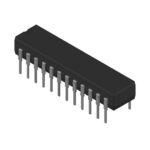 100328PC
The activity of extra discounts on wholesale prices is in full swing…
Please fill in your contact information and we will send you the latest wholesale price list.





