ChipApex | Global Electronic Components Supplier

SEARCH
Search Product
Search Post
— IC芯片 | 连接器 | 传感器 | 被动器件 —
Search productSearch post
— IC芯片 | 连接器 | 传感器 | 被动器件 —
Consult the customer manager about the wholesale price.
consultation hotline:86-132-6715-2157
email:[email protected]
Contact the product manager for consultation. One-stop consultation is available.
Do you want a lower wholesale price? Please send us your inquiry and we will reply immediately.
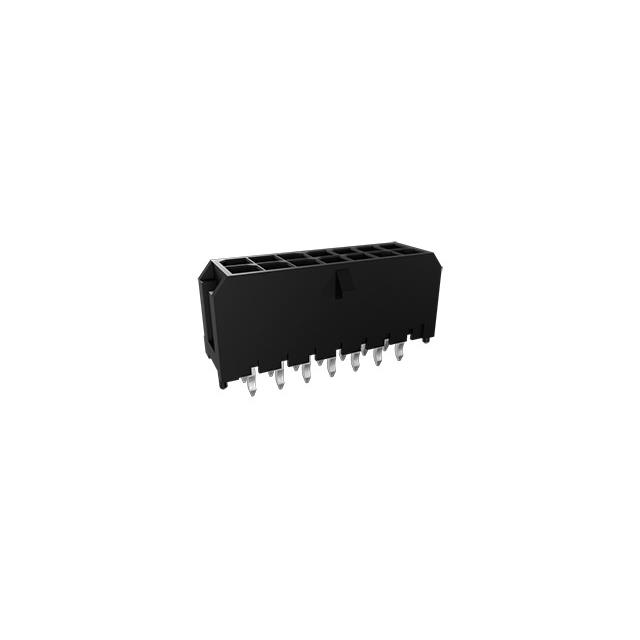
The Amphenol ICC (FCI) part number 10127721-225SLF is a Minitek Pwr 3.0 series power-to-board header connector. It features a dual-row configuration with 22 positions and a 3 mm pitch. The component utilizes male pin contacts made of copper alloy with tin plating, rated for 8.5 A current and 600 VAC voltage. Designed for through-hole mounting at a straight angle, the housing is constructed from natural Liquid Crystal Polymer (LCP). It operates within a temperature range of -40°C to +105°C and meets UL94 V-0 flammability standards.
Verify the specific contact plating finish against project requirements, as suffixes indicate different materials. Confirm that the straight through-hole mounting style aligns with the PCB layout constraints. Ensure the 3 mm pitch matches the target footprint dimensions precisely. Check for RoHS compliance status if required by regulatory standards. Validate the operating temperature range suitability for the intended environmental conditions.
Select this component when a robust power connection with a 3 mm pitch is required. The dual-row arrangement allows for higher current capacity compared to single-row alternatives. Consider the tin-plated contacts for cost-effective solutions where gold plating is not mandatory. Ensure the natural LCP housing color meets aesthetic or identification needs. Verify that the straight orientation fits the mechanical assembly space available on the target board.
This connector belongs to the Minitek Pwr 3.0 family, designed for power-to-board applications. The series offers various position counts and plating options to suit diverse power delivery needs. Amphenol FCI provides these connectors for use in systems requiring reliable electrical connections under varying thermal and mechanical stresses. The product line supports both signal and power transmission in compact form factors.
Compatible substitutes include 10127721-225GRLF and 10127721-225TLF from the same manufacturer. These variants share identical mechanical dimensions and electrical ratings but differ in contact plating materials. Ensure the alternative plating type meets the specific corrosion resistance and conductivity requirements of the application.
 10127721-225SLF

The activity of extra discounts on wholesale prices is in full swing…
Please fill in your contact information and we will send you the latest wholesale price list.