 ChipApex | Global Electronic Components Supplier
SEARCH
Search Product
Search Post
— IC芯片 | 连接器 | 传感器 | 被动器件 —
Search productSearch post
— IC芯片 | 连接器 | 传感器 | 被动器件 —
Consult the customer manager about the wholesale price.
consultation hotline:86-132-6715-2157
email:[email protected]
Contact the product manager for consultation. One-stop consultation is available.
Do you want a lower wholesale price? Please send us your inquiry and we will reply immediately.
The Amphenol ICC (FCI) part number 10153118-140KCLF is a Wire-to-Board header and wire housing component. It features a dual-row configuration with 40 positions and a pitch of 1.8 mm (0.071 in). The connector utilizes a right-angle through-hole mounting style with solder pin termination. Electrical specifications include a current rating of 3 A and a voltage rating of 48 VAC/DC. The contacts are made of brass with tin plating, while the housing is constructed from black thermoplastic material rated UL 94 V-0. The operating temperature range spans from -40 C to +105 C, and the insulation resistance is specified at 100 MOhms.
Verify the specific ordering suffix KCLF against official manufacturer documentation to confirm packaging details and compliance status. Ensure compatibility with mating wire harnesses regarding contact size and housing polarization. Cross-reference the RoHS declaration directly with the latest datasheet to confirm environmental compliance requirements for your specific manufacturing process.
Select this component when a 1.8 mm pitch dual-row header is required for right-angle connections. Consider the 3 A current rating and 48 VAC/DC voltage limit for circuit design constraints. Evaluate the through-hole mounting requirement against available PCB space and assembly methods. Confirm that the -40 C to +105 C operating range meets the environmental conditions of the target application.
This component belongs to the FCI Basics series of connectors, which provides economical and durable solutions for various interconnect needs. Amphenol acquired FCI, continuing the brand's legacy in providing robust electrical connections. This specific header is designed for general-purpose applications requiring reliable signal and power transmission in compact electronic assemblies.
Publicly confirmed substitute part numbers are not available in the provided documentation. Verify cross-references only through official Amphenol ICC (FCI) channels or authorized distributor databases to ensure functional and dimensional compatibility.
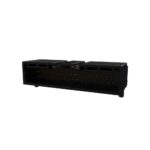 10153118-140KCLF
The activity of extra discounts on wholesale prices is in full swing…
Please fill in your contact information and we will send you the latest wholesale price list.




