 ChipApex | Global Electronic Components Supplier
SEARCH
Search Product
Search Post
— IC芯片 | 连接器 | 传感器 | 被动器件 —
Search productSearch post
— IC芯片 | 连接器 | 传感器 | 被动器件 —
Consult the customer manager about the wholesale price.
consultation hotline:86-132-6715-2157
email:[email protected]
Contact the product manager for consultation. One-stop consultation is available.
Do you want a lower wholesale price? Please send us your inquiry and we will reply immediately.
The Altera 10AS016E3F27E1HG is an Arria 10 SX SoC FPGA featuring a hardened dual-core ARM Cortex-A9 processor subsystem and programmable logic. It provides 160,000 Logic Elements (LEs) and 61,510 Adaptive Logic Modules (ALMs). The device includes 8.59 Mbits of embedded memory and supports up to 288 I/O pins. It integrates 12 high-speed transceivers capable of data rates up to 17.4 Gb/s. The core operating voltage ranges from 870 mV to 980 mV, with a typical value of 950 mV. It operates within a temperature range of -40°C to +100°C and is housed in a 672-ball FBGA package.
Verify the specific suffix codes against official Intel/Altera documentation to confirm package type, temperature grade, and speed grade match the design requirements. Ensure compliance with export control classifications such as ECCN 3A991 if applicable to the destination region. Confirm moisture sensitivity levels and shelf-life constraints prior to assembly to maintain component reliability during surface mount processes.
Select this model when the design requires a balance of moderate logic density and robust processing capabilities within the Arria 10 family. Compare the 12-transceiver count against application bandwidth needs; higher transceiver counts are available in larger packages like the 780-ball variant. Evaluate power consumption profiles at the target clock frequencies to ensure thermal management solutions align with the 950 mV core voltage operation.
This part belongs to the Arria 10 SX series, which targets cost-sensitive yet performance-critical applications compared to the higher-end Stratix 10 or Arria 10 GX families. The 'SX' designation indicates a focus on balanced performance and power efficiency. It shares architectural similarities with other Arria 10 variants but offers a specific resource footprint optimized for mid-range SoC implementations.
Direct pin-to-pin replacements within the same package and logic density are limited within the Arria 10 lineup. Consider the 10AS016E3F27I1HG for industrial temperature grades or different speed bins. For legacy migration, review Intel's product transition notices for end-of-life status and recommended alternative part numbers offering equivalent I/O and logic resources.
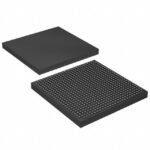 10AS016E3F27E1HG
The activity of extra discounts on wholesale prices is in full swing…
Please fill in your contact information and we will send you the latest wholesale price list.




