 ChipApex | Global Electronic Components Supplier
SEARCH
Search Product
Search Post
— IC芯片 | 连接器 | 传感器 | 被动器件 —
Search productSearch post
— IC芯片 | 连接器 | 传感器 | 被动器件 —
Consult the customer manager about the wholesale price.
consultation hotline:86-132-6715-2157
email:[email protected]
Contact the product manager for consultation. One-stop consultation is available.
Do you want a lower wholesale price? Please send us your inquiry and we will reply immediately.
The Altera 10AS016E3F27I1HG is an Arria 10 SX 160 SoC FPGA featuring a hardened dual-core ARM Cortex-A9 processor subsystem and programmable logic. It provides 160,000 Logic Elements (LEs), 61,510 Adaptive Logic Modules (ALMs), and 8.59 Mbits of embedded memory. The device includes 288 I/O pins and 12 transceivers supporting data rates up to 17.4 Gb/s. Operating voltage ranges from 870 mV to 980 mV with a typical core voltage of 950 mV. It operates within a temperature range of -40°C to +100°C and is housed in a 672-ball FBGA package.
Verify component authenticity by checking manufacturer markings against official datasheet specifications. Confirm package integrity and pin alignment prior to installation. Ensure compliance with RoHS directives as indicated in product documentation. Validate supply chain sources to avoid counterfeit components. Review latest errata sheets for any known silicon revisions or operational constraints before finalizing procurement orders.
Select this model when a balance of moderate logic density and integrated processing capability is required. Compare transceiver counts against interface bandwidth requirements. Verify that the FBGA-672 package fits the board layout constraints. Consider thermal management solutions suitable for the specified operating temperature range. Evaluate power supply designs to accommodate the specific voltage rails defined in the electrical characteristics.
This part belongs to the Arria 10 SX family, designed for cost-sensitive yet performance-critical applications. It shares architectural similarities with other Arria 10 variants but differs in logic resource count and package options. The SX series targets mid-range SoC FPGA markets, offering a compromise between the smaller Cyclone series and larger Stratix devices.
Direct substitutes include other Arria 10 SX 160 variants with different speed grades or packages, such as 10AS016E3F27I2LG. Cross-family replacements like Stratix 10 require significant design revalidation due to architectural differences.
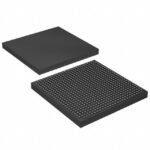 10AS016E3F27I1HG
The activity of extra discounts on wholesale prices is in full swing…
Please fill in your contact information and we will send you the latest wholesale price list.




