 ChipApex | Global Electronic Components Supplier
SEARCH
Search Product
Search Post
— IC芯片 | 连接器 | 传感器 | 被动器件 —
Search productSearch post
— IC芯片 | 连接器 | 传感器 | 被动器件 —
Consult the customer manager about the wholesale price.
consultation hotline:86-132-6715-2157
email:[email protected]
Contact the product manager for consultation. One-stop consultation is available.
Do you want a lower wholesale price? Please send us your inquiry and we will reply immediately.
The Altera 10AS022E3F29I1SG is an Arria 10 SX 220 System on Chip FPGA. It integrates a dual-core ARM Cortex-A9 processor with programmable logic resources comprising 220,000 logic elements and 80,330 adaptive logic modules. The device includes 11.46 Mbits of embedded memory and supports data rates up to 17.4 Gb/s via its transceivers. Operating voltage ranges from 870 mV to 980 mV, with a maximum operating frequency of 1.5 GHz. It features 288 I/O pins and operates within a temperature range of -40°C to +100°C.
Verify the specific ordering suffix to ensure compliance with export control regulations, as indicated by ECCN classifications for similar Arria 10 variants. Confirm RoHS compliance status directly with the manufacturer or authorized distributors. Ensure that the procurement channel provides valid traceability documentation required for regulated industries. Check for any specific handling guidelines related to moisture sensitivity levels before assembly.
Select this model when a balance of processing power and logic density is required for complex system integration. The Arria 10 SX series is optimized for cost-sensitive applications compared to the GX family while maintaining high performance. Evaluate the available I/O count against interface requirements to ensure sufficient connectivity. Consider the thermal management capabilities of the UBGA-484 package for the intended operating environment.
This component belongs to the Arria 10 SoC FPGA family, which combines ARM processor cores with FPGA fabric. The 'SX' designation indicates the System eXpansion variant, typically offering a balance of performance and cost. The '220' refers to the approximate logic element count in thousands. This series targets mid-range applications requiring both hard processor system functionality and reconfigurable logic.
Direct replacements within the same package and pinout include other Arria 10 SX 220 variants with different temperature grades or speed bins, such as 10AS022E3F29E2SG. Cross-family migration to Stratix 10 or Agilex devices requires significant design adaptation due to architectural differences.
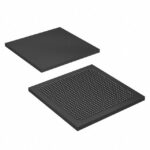 10AS022E3F29I1SG
The activity of extra discounts on wholesale prices is in full swing…
Please fill in your contact information and we will send you the latest wholesale price list.




