 ChipApex | Global Electronic Components Supplier
SEARCH
Search Product
Search Post
— IC芯片 | 连接器 | 传感器 | 被动器件 —
Search productSearch post
— IC芯片 | 连接器 | 传感器 | 被动器件 —
Consult the customer manager about the wholesale price.
consultation hotline:86-132-6715-2157
email:[email protected]
Contact the product manager for consultation. One-stop consultation is available.
Do you want a lower wholesale price? Please send us your inquiry and we will reply immediately.
The Altera 10AS027H4F34E3LG is an Arria 10 SX FPGA featuring 270,000 logic elements and 119,900 adaptive logic modules. It integrates a dual-core ARM Cortex-A9 Hard Processor System operating up to 1.5 GHz. The device includes 18.6 Mbit of embedded memory and supports up to 48 full-duplex transceivers with data rates reaching 17.4 Gbps for chip-to-chip communication. It utilizes a 20nm process technology and is housed in an FFG1152 package with 672 pins. The component operates within a commercial temperature range of 0°C to +100°C.
Verify the specific suffix E3 against official Intel/Altera documentation to confirm speed grade and commercial temperature rating. Ensure compliance with export control classifications (ECCN 3A991) relevant to your jurisdiction. Request original manufacturer packaging or authorized distributor certificates to mitigate risks associated with refurbished components. Confirm RoHS status details directly from the datasheet before finalizing procurement orders.
Select this model when system requirements demand integrated processing capabilities alongside programmable logic fabric. The Arria 10 SX family offers a balance of performance and power efficiency suitable for complex embedded applications. Compare logic density and transceiver counts against alternative devices if higher throughput or larger memory resources are needed. Evaluate thermal management solutions based on the 20nm工艺 power characteristics.
This component belongs to the Arria 10 SX SoC FPGA family, designed for cost-sensitive embedded applications. It combines programmable logic with an embedded ARM processor to reduce board complexity. The series targets markets requiring flexible system integration, including industrial, automotive, and communications sectors. It serves as a mid-range solution within the broader Arria portfolio.
Direct substitutes include other Arria 10 SX variants with different logic densities or package options. Cross-family migration to Cyclone 10 GX may be considered for simpler logic requirements without embedded processors. Verify pin compatibility and software toolchain support when evaluating alternative part numbers.
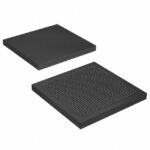 10AS027H4F34E3LG
The activity of extra discounts on wholesale prices is in full swing…
Please fill in your contact information and we will send you the latest wholesale price list.




