 ChipApex | Global Electronic Components Supplier
SEARCH
Search Product
Search Post
— IC芯片 | 连接器 | 传感器 | 被动器件 —
Search productSearch post
— IC芯片 | 连接器 | 传感器 | 被动器件 —
Consult the customer manager about the wholesale price.
consultation hotline:86-132-6715-2157
email:[email protected]
Contact the product manager for consultation. One-stop consultation is available.
Do you want a lower wholesale price? Please send us your inquiry and we will reply immediately.
The Altera 10AS048K4F35I3LG is an Arria 10 SX 480 System on Chip FPGA housed in a 1152-ball FBGA package. It features 480,000 logic elements and 183,590 adaptive logic modules for high-density programmable logic. The device integrates 27.95 Mbit of embedded memory and supports up to 492 I/O pins. It includes 36 transceivers capable of data rates up to 17.4 Gb/s. Operating voltage ranges from 870 mV to 980 mV with a typical operating voltage of 950 mV. The maximum operating frequency reaches 1.5 GHz, and the component functions within a temperature range of 0°C to +100°C.
Verify the specific ordering suffix against official Intel/Altera documentation to confirm temperature grade and speed bin accuracy. Ensure compliance with export control regulations as indicated by ECCN classifications. Confirm RoHS status and moisture sensitivity levels prior to assembly planning. Cross-reference part numbers with current lifecycle status to avoid obsolescence risks during production.
Select this model when high logic density combined with embedded processor capabilities is required. Evaluate the 1152-ball FBGA package constraints against board space limitations. Consider the 17.4 Gb/s transceiver bandwidth for high-speed interface requirements. Verify that the 27.95 Mbit memory capacity meets system data storage needs without external memory dependencies.
This component belongs to the Arria 10 SoC FPGA family, designed for mid-range applications requiring both hard processor systems and flexible logic. It sits between lower-density Cyclone devices and higher-end Stratix families. The Arria 10 series emphasizes power efficiency and cost-effectiveness for scalable designs. This specific variant offers a balance of performance and resource availability for complex digital signal processing tasks.
Direct substitutes include other Arria 10 variants with similar logic counts such as 10AS048K3F35E2LG or 10AS048N2F35E2LG. Check pin compatibility and electrical specifications before substitution. Higher performance alternatives may require package changes. Lower density options might necessitate logic redistribution.
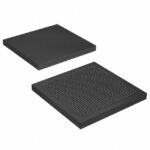 10AS048K4F35I3LG
The activity of extra discounts on wholesale prices is in full swing…
Please fill in your contact information and we will send you the latest wholesale price list.




