 ChipApex | Global Electronic Components Supplier
SEARCH
Search Product
Search Post
— IC芯片 | 连接器 | 传感器 | 被动器件 —
Search productSearch post
— IC芯片 | 连接器 | 传感器 | 被动器件 —
Consult the customer manager about the wholesale price.
consultation hotline:86-132-6715-2157
email:[email protected]
Contact the product manager for consultation. One-stop consultation is available.
Do you want a lower wholesale price? Please send us your inquiry and we will reply immediately.
The Altera 10AT115U4F45E4SGES is an Arria 10 GT Field Programmable Gate Array (FPGA) belonging to the 1150K logic element density tier. It features a 1932-pin FBGA package and supports high-speed serial data rates up to 17.4 Gb/s via its integrated transceivers. The device operates within a core voltage range of 870 mV to 930 mV and is rated for industrial temperatures from -40°C to +100°C. This specific engineering sample variant includes suffixes indicating specialized testing or configuration attributes distinct from standard production units.
Verify the engineering sample status indicated by the 'ES' suffix before procurement, as these units may lack full commercial qualification or warranty coverage compared to standard production parts. Confirm availability through authorized distributors, noting that this specific part number may be discontinued or restricted in certain regions. Ensure compliance with export control regulations associated with high-performance FPGA devices.
Select this model when designing systems requiring the specific Arria 10 GT architecture with 1.15M LEs and high-speed SerDes capabilities. Compare against the 10AX115 series if lower power consumption is prioritized over the GT transceiver performance. Verify that the 1932-pin footprint matches the target PCB layout constraints and that the design tools support the specific engineering sample revision.
This component belongs to the Arria 10 family, which bridges the gap between Stratix and Cyclone families by offering high-end DSP and transceiver resources at a mid-range cost point. The 10AT115 designation identifies it as a top-tier device within the 1150K density group, designed for applications needing significant parallel processing and high-bandwidth I/O.
Direct pin-to-pin replacements are not publicly documented for this specific engineering sample variant. Consider the 10AT115S2F45E2SG or 10AT115U3F45E2SGES as functional equivalents within the same density class, provided the transceiver count and package compatibility align with the design requirements.


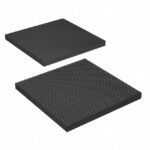 10AT115U4F45E4SGES
The activity of extra discounts on wholesale prices is in full swing…
Please fill in your contact information and we will send you the latest wholesale price list.


