 ChipApex | Global Electronic Components Supplier
SEARCH
Search Product
Search Post
— IC芯片 | 连接器 | 传感器 | 被动器件 —
Search productSearch post
— IC芯片 | 连接器 | 传感器 | 被动器件 —
Consult the customer manager about the wholesale price.
consultation hotline:86-132-6715-2157
email:[email protected]
Contact the product manager for consultation. One-stop consultation is available.
Do you want a lower wholesale price? Please send us your inquiry and we will reply immediately.
The Altera 10AX027E3F29I2SG is an Arria 10 GX SoC FPGA featuring a hardened dual-core ARM Cortex-A9 processor subsystem and high-performance programmable logic. It provides 270,000 logic elements, 14.65 Mbit of embedded memory, and 24 high-speed transceivers capable of 17.4 Gb/s data rates. The device operates within a core voltage range of 870 mV to 980 mV and supports I/O counts up to 384. Packaged in a 1152-ball FBGA, it functions reliably between -40°C and +100°C, targeting bandwidth-intensive applications requiring significant computational throughput.
Verify the specific ordering suffix against official Intel/Altera documentation to confirm package type, temperature grade, and industrial specifications. Ensure compliance with export control classifications such as ECCN 3A991.d if applicable to your jurisdiction. Confirm moisture sensitivity levels and shelf-life constraints prior to assembly to maintain component integrity during surface mount processes.
Compare the 270k logic element capacity and 24-transceiver count against project requirements to ensure sufficient resource headroom. Evaluate the power consumption profiles across different operating frequencies and voltage settings. Consider alternative Arria 10 variants if higher transceiver density or different package pin counts better suit the board layout constraints.
This component belongs to the Arria 10 GX family, designed for cost-sensitive yet performance-critical applications. It bridges the gap between lower-end Cyclone devices and high-end Stratix FPGAs by offering substantial compute power in a manageable form factor. The series emphasizes energy efficiency while maintaining robust connectivity options for modern interface standards.
Direct replacements within the same family include other Arria 10 GX models with adjusted logic or transceiver counts, such as 10AX022 or 10AX115 series variants. Verify pin compatibility and thermal characteristics when substituting with larger packages. Cross-family migration to Agilex may require significant architectural redesign due to differing interface and memory controller implementations.


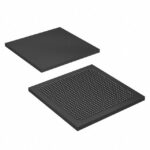 10AX027E3F29I2SG
The activity of extra discounts on wholesale prices is in full swing…
Please fill in your contact information and we will send you the latest wholesale price list.



