 ChipApex | Global Electronic Components Supplier
SEARCH
Search Product
Search Post
— IC芯片 | 连接器 | 传感器 | 被动器件 —
Search productSearch post
— IC芯片 | 连接器 | 传感器 | 被动器件 —
Consult the customer manager about the wholesale price.
consultation hotline:86-132-6715-2157
email:[email protected]
Contact the product manager for consultation. One-stop consultation is available.
Do you want a lower wholesale price? Please send us your inquiry and we will reply immediately.
The Altera 10AX027H3F35E2SG is an Arria 10 GX 270 Field Programmable Gate Array (FPGA) designed for high-performance digital logic applications. It features 270,000 logic elements and 101,620 Adaptive Logic Modules within a 1152-pin FBGA package. The device supports a maximum operating frequency of 1.5 GHz and includes 24 transceivers capable of data rates up to 17.4 Gb/s. Embedded memory capacity totals 14.65 Mbit, with 384 I/O pins available for system connectivity. It operates at a nominal voltage of 950 mV, ranging from 870 mV to 980 mV, and functions within a commercial temperature range of 0°C to +100°C.
Verify the specific suffix E2 against official Intel/Altera documentation to confirm it denotes the commercial temperature grade and does not imply alternative packaging or extended specifications. Confirm RoHS compliance status directly with the manufacturer datasheet, as regulatory details may vary by production batch. Ensure export control classifications are reviewed prior to international procurement due to potential restrictions on FPGA technologies.
Select this component when the design requires the specific logic density of the Arria 10 GX 270 variant combined with 24 transceivers. Compare against the 10AS027 model if System-on-Chip capabilities are unnecessary, as the 10AX series focuses purely on FPGA fabric performance. Validate that the 1152-pin FBGA footprint matches the PCB layout constraints and thermal management requirements for the target application environment.
This part belongs to the Arria 10 GX family, which targets cost-sensitive high-volume applications compared to the Stratix 10 series. It shares the same 16nm process technology but lacks the hard processor systems found in SoC variants. The 10AX027 represents a mid-range density option within the GX lineup, balancing resource availability with power efficiency for standard logic-intensive designs.
Publicly confirmed direct substitute part numbers are not available in the provided source material. Designers should consult official Intel lifecycle documents for end-of-life notices or recommended migration paths to Agilex families if long-term supply assurance is required.
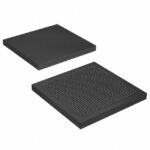 10AX027H3F35E2SG
The activity of extra discounts on wholesale prices is in full swing…
Please fill in your contact information and we will send you the latest wholesale price list.






