 ChipApex | Global Electronic Components Supplier
SEARCH
Search Product
Search Post
— IC芯片 | 连接器 | 传感器 | 被动器件 —
Search productSearch post
— IC芯片 | 连接器 | 传感器 | 被动器件 —
Consult the customer manager about the wholesale price.
consultation hotline:86-132-6715-2157
email:[email protected]
Contact the product manager for consultation. One-stop consultation is available.
Do you want a lower wholesale price? Please send us your inquiry and we will reply immediately.
The Microchip Technology 11AA02E64T-I/TT is a 2 Kbit Serial Electrically Erasable PROM organized in 256 x 8-bit blocks. It features a preprogrammed globally unique 64-bit Node Address compatible with EUI-64 standards and utilizes the UNI/O single I/O serial interface bus. The device operates within a voltage range of 1.8V to 5.5V, supporting an industrial temperature range from -40°C to +85°C. Key electrical characteristics include a maximum bit rate of 100 kbps, typical active current of 1 mA, and maximum standby current of 1 µA. It offers high reliability with over 1,000,000 erase/write cycles and data retention exceeding 200 years.
Verify that the specific suffix 'I' corresponds to the Industrial temperature range (-40°C to +85°C) and 'TT' indicates the SOT-23-3 package. Confirm the 'E64' designation ensures the presence of the 64-bit EUI-64 address rather than the 48-bit variant. Ensure the source documentation explicitly supports these parameter mappings for this exact part number before finalizing procurement specifications.
Select this component when a system requires a unique hardware identifier integrated directly into non-volatile memory without additional address pins. The UNI/O interface is suitable for designs constrained by available GPIO lines. Consider the 1.8V minimum operating voltage for compatibility with low-power logic families. Evaluate the page-write buffer size against application throughput requirements to optimize write performance.
This device belongs to the 11AA02EXX family of 2 Kbit UNI/O serial EEPROMs manufactured by Microchip Technology. It shares functional similarities with the 11AA02E48 but differs specifically in its preprogrammed address length. The family is designed for applications needing compact footprints and robust identity management capabilities within industrial-grade environments.
The 11AA02E48T-I/TT serves as a direct substitute if the system architecture accommodates a 48-bit EUI-48 address instead of the required 64-bit format. Verify pinout compatibility and software driver support for the UNI/O protocol remains unchanged during substitution.
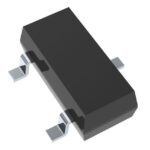 11AA02E64T-I/TT
The activity of extra discounts on wholesale prices is in full swing…
Please fill in your contact information and we will send you the latest wholesale price list.




