 ChipApex | Global Electronic Components Supplier
SEARCH
Search Product
Search Post
— IC芯片 | 连接器 | 传感器 | 被动器件 —
Search productSearch post
— IC芯片 | 连接器 | 传感器 | 被动器件 —
Consult the customer manager about the wholesale price.
consultation hotline:86-132-6715-2157
email:[email protected]
Contact the product manager for consultation. One-stop consultation is available.
Do you want a lower wholesale price? Please send us your inquiry and we will reply immediately.
The Microchip Technology 11AA02UID-I/SN is a 2 Kbit Serial Electrically Erasable PROM featuring a preprogrammed, unique 32-bit serial number. It utilizes the UNI/O single I/O serial interface bus with Manchester encoding for clock and data transmission on a single pin (SCIO). The device supports a maximum bit rate of 100 kbps and operates within a supply voltage range of 1.8V to 5.5V. Memory organization is 256 x 8 bits with a page size of 16 bytes. It includes Schmitt trigger inputs, output slope control, and block write protection capabilities.
Verify the specific suffix 'I/SN' corresponds to the Industrial temperature range (-40°C to +85°C) and 8-lead SOIC package as documented in the official datasheet. Confirm that the preprogrammed 32-bit serial number matches your system's requirements, as this value is factory-set and cannot be altered. Ensure compatibility with the UNI/O protocol controller logic before procurement.
Select the 11AA02UID-I/SN when a unique hardware identifier is required alongside standard EEPROM functionality. This part is suitable for designs needing a single-wire interface to save GPIO pins. Compare against other UNI/O devices if multi-drop bus configurations are needed, noting that the device address is hardwired. Consider the 8-lead SOIC package constraints for PCB layout compared to the SOT-23 alternative.
The 11AA02UID belongs to Microchip's UNI/O serial EEPROM family, distinguished by its integrated unique ID feature. Unlike standard EEPROMs, this variant provides a permanent 32-bit serial number programmed at the factory. It shares the low-power CMOS technology and single-bus interface architecture with other members of the 11AA02 series, offering a compact solution for secure identification in space-constrained applications.
Direct replacements must support the UNI/O protocol and contain a preprogrammed unique ID. Verify that substitute parts offer the same 32-bit ID length or confirm if the application can accommodate different ID lengths such as 48-bit or 64-bit variants within the same UID family.
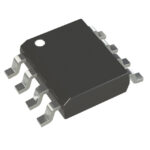 11AA02UID-I/SN
The activity of extra discounts on wholesale prices is in full swing…
Please fill in your contact information and we will send you the latest wholesale price list.





