 ChipApex | Global Electronic Components Supplier
SEARCH
Search Product
Search Post
— IC芯片 | 连接器 | 传感器 | 被动器件 —
Search productSearch post
— IC芯片 | 连接器 | 传感器 | 被动器件 —
Consult the customer manager about the wholesale price.
consultation hotline:86-132-6715-2157
email:[email protected]
Contact the product manager for consultation. One-stop consultation is available.
Do you want a lower wholesale price? Please send us your inquiry and we will reply immediately.
The Microchip Technology 11AA02UIDT-I/SN is a 2 Kbit Serial Electrically Erasable PROM featuring a preprogrammed 32-bit unique ID. It utilizes the UNI/O single I/O serial interface bus with Manchester encoding, supporting a maximum bit rate of 100 kbps. The device operates within a supply voltage range of 1.8V to 5.5V and is organized as 256 x 8 bits. It includes a 16-byte page-write buffer, block write protection, and built-in power-on/off data protection. The component offers high reliability with over 1,000,000 erase/write cycles and data retention exceeding 200 years.
Verify the specific package suffix against the datasheet. The 'SN' suffix indicates an 8-lead SOIC package, while 'TT' denotes a SOT-23 package. Ensure the temperature grade matches the application requirements, as industrial grades cover -40°C to +85°C. Confirm RoHS compliance status if required by regulatory standards. Cross-reference the full part number with official Microchip documentation to ensure correct pinout and electrical characteristics.
Select this component when a single-wire interface is required to minimize pin count on the host microcontroller. The UNI/O protocol simplifies PCB layout compared to multi-wire interfaces like SPI or I2C. Choose this device for applications requiring permanent, factory-programmed identification that cannot be altered by end users. Consider the low standby current for battery-powered designs where power conservation is critical during idle periods.
The 11AA02UID belongs to Microchip's UNI/O family of serial EEPROMs designed for cost-sensitive and space-constrained applications. Unlike standard EEPROMs, these devices integrate a unique identifier directly into the silicon during manufacturing. This integration eliminates the need for separate security chips or complex software-based identification schemes, streamlining the design process for manufacturers needing robust device tracking capabilities.
Check for 11AA02UID variants with different package suffixes such as TT for SOT-23-3 if footprint changes are acceptable. Verify compatibility with existing firmware drivers, as the UNI/O protocol requires specific timing and state machine handling distinct from I2C or SPI controllers.
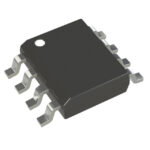 11AA02UIDT-I/SN
The activity of extra discounts on wholesale prices is in full swing…
Please fill in your contact information and we will send you the latest wholesale price list.






