 ChipApex | Global Electronic Components Supplier
SEARCH
Search Product
Search Post
— IC芯片 | 连接器 | 传感器 | 被动器件 —
Search productSearch post
— IC芯片 | 连接器 | 传感器 | 被动器件 —
Consult the customer manager about the wholesale price.
consultation hotline:86-132-6715-2157
email:[email protected]
Contact the product manager for consultation. One-stop consultation is available.
Do you want a lower wholesale price? Please send us your inquiry and we will reply immediately.
The Microchip Technology 11AA160T-I/SN is a 16 Kbit serial electrically erasable programmable read-only memory (EEPROM) utilizing the UNI/O single I/O bus interface. It features a 2048 x 8 bit organization with a 16-byte page write buffer. The device operates within a supply voltage range of 1.8V to 5.5V and supports industrial temperature ranges from -40°C to +85°C. Key electrical characteristics include a maximum serial bus frequency of 100 kHz, typical active current of 1 mA, and maximum standby current of 1 µA. It offers high reliability with 1,000,000 erase/write cycle endurance and data retention exceeding 200 years.
Verify the specific suffix 'I/SN' corresponds to the Industrial temperature range (-40°C to +85°C) and SOIC-8 package as documented in the datasheet. Confirm that the 'T' designation indicates tape and reel packaging if required for automated assembly. Ensure compatibility with the master controller's ability to implement the UNI/O Manchester encoding protocol rather than standard SPI or I2C interfaces.
Select this component when a single-pin serial interface is preferred to minimize microcontroller I/O usage. It is suitable for applications requiring low standby current and robust write protection mechanisms. Consider the 16-byte page buffer size for write efficiency. Verify that the host system can generate the specific start header and acknowledge sequences defined in the UNI/O protocol specification.
This part belongs to the 11AA/11LC family of 1 Kbit to 16 Kbit serial EEPROMs. The 'AA' variant specifically supports low-voltage operation down to 1.8V, distinguishing it from the 'LC' series which typically requires a minimum of 2.5V. The family shares common command sets and physical package options, facilitating design scalability across different memory density requirements.
The 11AA161-I/SN serves as a direct substitute with an alternative device address code (0xA1 vs 0xA0). Other family members like the 11AA080 or 11AA040 offer lower densities but share identical interface and electrical characteristics. Cross-referencing the device address byte is critical when substituting to avoid bus conflicts.
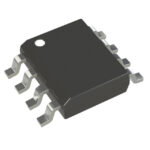 11AA160T-I/SN
The activity of extra discounts on wholesale prices is in full swing…
Please fill in your contact information and we will send you the latest wholesale price list.





