 ChipApex | Global Electronic Components Supplier
SEARCH
Search Product
Search Post
— IC芯片 | 连接器 | 传感器 | 被动器件 —
Search productSearch post
— IC芯片 | 连接器 | 传感器 | 被动器件 —
Consult the customer manager about the wholesale price.
consultation hotline:86-132-6715-2157
email:[email protected]
Contact the product manager for consultation. One-stop consultation is available.
Do you want a lower wholesale price? Please send us your inquiry and we will reply immediately.
The Microchip Technology 11LC040-I/P is a 4 Kbit (512 x 8) serial EEPROM utilizing the UNI/O single I/O bus interface. It operates within a supply voltage range of 2.5 V to 5.5 V and supports a maximum clock frequency of 100 kHz. The device features a 16-byte page-write buffer, self-timed write cycles, and block write protection capabilities. Designed for industrial applications, it functions reliably between -40°C and +85°C. Key electrical characteristics include a typical active current of 1 mA and a maximum standby current of 1 µA.
Verify that the ordering suffix 'P' corresponds to the 8-lead PDIP package type required for through-hole mounting. Confirm the 'I' suffix indicates the Industrial temperature range (-40°C to +85°C). Ensure compatibility with the UNI/O bus protocol before integration into designs utilizing standard SPI or I2C interfaces.
Select this component when a single-wire serial interface is preferred to minimize pin count compared to SPI or I2C alternatives. It is suitable for applications requiring moderate data density up to 4 Kbit with robust write protection features. Consider the 16-byte page buffer size for write efficiency and verify that the host controller can generate the specific Manchester-encoded timing required by the UNI/O protocol.
This part belongs to the 11XX family of serial EEPROMs from Microchip Technology, which includes densities ranging from 1 Kbit to 16 Kbit. The family shares common architectural features such as the UNI/O interface and similar command sets. Variants within the family differ primarily in storage capacity, organization, and available package types, allowing for scalable design solutions across different memory requirements.
Direct substitutes within the same UNI/O family include the 11LC020 (2 Kbit) and 11LC080 (8 Kbit), provided the memory size difference is acceptable. Other packages for the same electrical specifications include SOIC (SN), MSOP (MS), and TDFN (MN). Note that the 11AA series offers lower voltage operation but lacks the Automotive temperature grade found in some other variants.
The UNI/O interface uses a single bidirectional I/O line (SCIO) for both clock and data transmission via Manchester encoding, whereas SPI typically requires separate pins for clock, data in, and data out.
The Write Enable Latch must be set via the WREN instruction before any write operations can be completed internally, providing a safeguard against accidental data corruption.
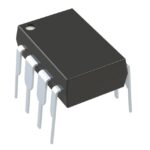 11LC040-I/P
The activity of extra discounts on wholesale prices is in full swing…
Please fill in your contact information and we will send you the latest wholesale price list.





