 ChipApex | Global Electronic Components Supplier

SEARCH
Search Product
Search Post
— IC芯片 | 连接器 | 传感器 | 被动器件 —
Search productSearch post
— IC芯片 | 连接器 | 传感器 | 被动器件 —
Consult the customer manager about the wholesale price.
consultation hotline:86-132-6715-2157
email:[email protected]
Contact the product manager for consultation. One-stop consultation is available.
Do you want a lower wholesale price? Please send us your inquiry and we will reply immediately.
The Microchip Technology 11LC160T-I/SN is a 16 Kbit (2,048 x 8) serial electrically erasable PROM utilizing the UNI/O single I/O bus interface. It operates within a voltage range of 2.5 V to 5.5 V and supports a maximum clock frequency of 100 kHz. The device features Schmitt trigger inputs for noise suppression and output slope control to eliminate ground bounce. It includes a STATUS register for write protection and in-progress monitoring, with block write protection capabilities. The component is housed in an 8-lead MSOP package and is rated for industrial temperature operation from -40°C to +85°C.
Verify that the ordering suffix corresponds to the MSOP-8 package and Industrial temperature grade (-40°C to +85°C). Confirm the specific density variant matches the required memory organization. Ensure compatibility with the master controller's UNI/O protocol implementation. Check for RoHS compliance status if required by assembly specifications.
Select this part when a single-pin serial interface is required to minimize PCB trace count. Choose this model for applications needing robust write protection and high endurance. Verify that the operating voltage range aligns with the system supply rails. Consider the MSOP package size constraints during layout planning.
This component belongs to the 11LC160 family of serial EEPROMs manufactured by Microchip Technology. The family shares common architectural features including the UNI/O interface and similar command sets across various densities. The 'I' designation indicates the industrial temperature range, while 'SN' specifies the MSOP package type.
Compatible substitutes include other members of the 11LC160 family such as 11LC160T-I/MS or 11LC160T-I/MNY, provided the package footprint and pinout are compatible with the existing design.
The UNI/O interface combines the clock and data into a single serial bit stream (SCIO) using Manchester encoding techniques, allowing the receiver to extract timing and decode values from the same line.
If a page write operation attempts to cross a physical page boundary, the address counter rolls over to the beginning of the current page, causing the new data to overwrite previously stored data instead of writing to the next page.
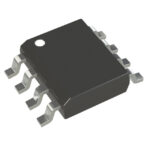 11LC160T-I/SN

The activity of extra discounts on wholesale prices is in full swing…
Please fill in your contact information and we will send you the latest wholesale price list.





