 ChipApex | Global Electronic Components Supplier
SEARCH
Search Product
Search Post
— IC芯片 | 连接器 | 传感器 | 被动器件 —
Search productSearch post
— IC芯片 | 连接器 | 传感器 | 被动器件 —
Consult the customer manager about the wholesale price.
consultation hotline:86-132-6715-2157
email:[email protected]
Contact the product manager for consultation. One-stop consultation is available.
Do you want a lower wholesale price? Please send us your inquiry and we will reply immediately.
The Geyer Electronic America, Inc. model 12.94207 is a standard crystal oscillator (XO) designed for precision clocking applications. It operates at a frequency of 8 MHz and utilizes CMOS or TTL output logic levels to ensure compatibility with various digital systems. The device features a 5V enable/disable control function, allowing for power management and signal gating within the circuit design. It is housed in a compact 4-SMD, No Lead package, facilitating surface-mount assembly on printed circuit boards. This component serves as a reliable frequency reference for microcontrollers and field-programmable gate arrays.
Verify the specific ordering suffix against the manufacturer's current datasheet to confirm exact electrical parameters and packaging options. Ensure the selected variant matches the required operating voltage and load capacitance specifications for the target application. Cross-reference the part number with authorized distributors to confirm availability and authenticity before placing orders.
Select this oscillator when an 8 MHz frequency is required for digital logic interfacing. Consider the 5V enable feature if system power management or signal gating is necessary. Evaluate the 4-SMD package dimensions against PCB layout constraints. Confirm that the CMOS/TTL output swing meets the input requirements of the connected microcontroller or FPGA.
This component belongs to Geyer Electronic's range of quartz precision frequency control devices. These products are engineered to support clocking tree signal conditioning in complex digital systems. The brand specializes in providing reliable oscillators and crystals for demanding industrial and commercial applications requiring precise timing stability.
Consult official substitution lists from Geyer Electronic for direct replacements. Verify that any alternative part matches the 8 MHz frequency, 4-SMD package, and CMOS/TTL output characteristics. Ensure compatible enable/disable functionality and operating voltage ranges before integrating substitute components.
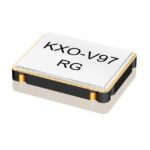 12.94207
The activity of extra discounts on wholesale prices is in full swing…
Please fill in your contact information and we will send you the latest wholesale price list.





