 ChipApex | Global Electronic Components Supplier
SEARCH
Search Product
Search Post
— IC芯片 | 连接器 | 传感器 | 被动器件 —
Search productSearch post
— IC芯片 | 连接器 | 传感器 | 被动器件 —
Consult the customer manager about the wholesale price.
consultation hotline:86-132-6715-2157
email:[email protected]
Contact the product manager for consultation. One-stop consultation is available.
Do you want a lower wholesale price? Please send us your inquiry and we will reply immediately.
The Geyer Electronic America, Inc. model 12.9428 is a surface mount quartz crystal designed for frequency control applications. It operates at a nominal frequency of 12.9428 MHz and typically utilizes a standard load capacitance configuration suitable for microcontroller or communication circuit interfaces. The component is rated for an operating temperature range of -20°C to +70°C, ensuring reliable performance in commercial electronic environments. As a passive resonant element, it provides the necessary timing reference for digital systems requiring precise clock generation without active power consumption during oscillation.
Verify the specific package dimensions and load capacitance requirements against your schematic before ordering. Confirm that the operating temperature range meets your environmental specifications. Check for any alternative pinout configurations if replacing existing designs. Ensure compatibility with your reflow soldering profile. Validate supply chain authenticity through authorized channels.
Choose this component when a fixed frequency of approximately 13 MHz is required for synchronous digital systems. Consider the surface mount form factor for space-constrained PCB layouts. Evaluate the commercial temperature range against your operational environment. Compare load capacitance values with your oscillator circuit design to ensure proper startup and stability. Assess mechanical mounting constraints on the target board.
Geyer Electronic America, Inc. manufactures a broad portfolio of frequency control products including crystals, oscillators, and ceramic resonators. The 12.9428 belongs to their line of surface mount quartz crystals, which are passive components used to stabilize oscillator frequencies in various electronic devices. These parts are known for consistent performance in consumer and industrial electronics.
Consult official manufacturer substitution lists for direct equivalents. Verify that any replacement part matches the exact frequency, load capacitance, and physical footprint. Ensure the substitute component meets the same temperature and electrical specifications. Cross-reference datasheets for pin compatibility and mounting requirements.
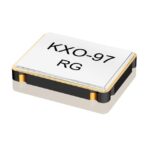 12.9428
The activity of extra discounts on wholesale prices is in full swing…
Please fill in your contact information and we will send you the latest wholesale price list.





