 ChipApex | Global Electronic Components Supplier
SEARCH
Search Product
Search Post
— IC芯片 | 连接器 | 传感器 | 被动器件 —
Search productSearch post
— IC芯片 | 连接器 | 传感器 | 被动器件 —
Consult the customer manager about the wholesale price.
consultation hotline:86-132-6715-2157
email:[email protected]
Contact the product manager for consultation. One-stop consultation is available.
Do you want a lower wholesale price? Please send us your inquiry and we will reply immediately.
The Geyer Electronic America, Inc. model 12.94385 is a ceramic surface-mount oscillator operating at a nominal frequency of 37.5 MHz. It utilizes CMOS and TTL output logic levels and supports a supply voltage of 3.3V with an enable/disable control function. The component features a 4-SMD, no-lead package with dimensions of 3.20mm x 2.50mm and a maximum height of 0.80mm. It belongs to the KX-7 series and operates in fundamental mode. The unit offers a frequency stability of ±10ppm and a load capacitance of 15pf. The equivalent series resistance (ESR) is specified at 60 ohms. Operating temperature range spans from -40°C to 105°C.
Verify that the specific ordering suffix matches the required packaging format, such as tape and reel or cut tape, as indicated by distributor codes. Confirm the enable pin configuration aligns with system control logic. Ensure the 3.3V supply requirement is met within the application's voltage tolerance. Check lead times against current manufacturer availability, as standard delivery periods may vary based on production schedules.
Select this component when a 37.5 MHz reference clock is required with low-profile surface-mount integration. The 3.3V operation makes it suitable for modern low-voltage digital environments. Consider the ±10ppm stability for applications demanding tight frequency accuracy. The enable feature allows for dynamic power control, which is beneficial for battery-operated devices or systems requiring clock gating capabilities during idle states.
This oscillator is part of Geyer Electronic's frequency control portfolio, specifically designed for applications needing reliable timing signals in compact form factors. It complements their quartz crystal and resonator offerings by providing a ready-to-use solution without external tuning components. The product line targets industries requiring robust performance across wide temperature ranges.
No public confirmed substitute part numbers are available in the provided documentation. Cross-referencing requires matching frequency, package dimensions, output logic, and voltage specifications precisely.
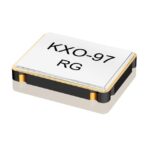 12.94385
The activity of extra discounts on wholesale prices is in full swing…
Please fill in your contact information and we will send you the latest wholesale price list.





