 ChipApex | Global Electronic Components Supplier

SEARCH
Search Product
Search Post
— IC芯片 | 连接器 | 传感器 | 被动器件 —
Search productSearch post
— IC芯片 | 连接器 | 传感器 | 被动器件 —
Consult the customer manager about the wholesale price.
consultation hotline:86-132-6715-2157
email:[email protected]
Contact the product manager for consultation. One-stop consultation is available.
Do you want a lower wholesale price? Please send us your inquiry and we will reply immediately.
The Geyer Electronic America, Inc. model 12.95087 is a ceramic surface-mount oscillator operating at 40 MHz with HCMOS output signals. It functions as a standard XO within a supply voltage range of -0.5V to 7V and features tri-state enable functionality. The component supports a maximum supply current of 11mA and consumes 50µA in disabled mode. Designed for robust performance, it maintains frequency stability of ±50ppm across an industrial temperature range of -40°C to 85°C. The device utilizes a compact 4-SMD, no-lead package measuring 3.20mm x 2.50mm with a maximum height of 0.80mm.
Verify the specific ordering suffixes provided by authorized distributors to ensure compatibility with required packaging formats such as tape and reel or cut tape. Confirm that the selected variant meets RoHS3 compliance standards and matches the specified 40 MHz frequency requirement. Cross-reference the manufacturer part number against official datasheets to validate electrical characteristics before finalizing procurement orders.
Select this component when a 40 MHz frequency is required for HCMOS-compatible digital logic applications. Ensure the design accommodates the specified voltage range and current consumption limits. Consider the physical dimensions of the 4-SMD package for PCB layout constraints. Verify that the operating temperature range aligns with the intended environmental conditions of the final product assembly.
This oscillator belongs to the KXO-V96 series from Geyer Electronic America, Inc., which specializes in frequency control products. The series includes various ceramic SMD oscillators designed for general-purpose timing applications. These components are characterized by their small form factor and reliability, making them suitable for space-constrained electronic designs requiring stable clock sources.
Public confirmed substitute part numbers are not available in the provided documentation. Users must consult official manufacturer resources or authorized distributor databases to identify compatible alternatives. Ensure any replacement matches the exact frequency, package type, and electrical specifications.
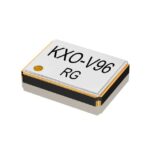 12.95087

The activity of extra discounts on wholesale prices is in full swing…
Please fill in your contact information and we will send you the latest wholesale price list.





