 ChipApex | Global Electronic Components Supplier

SEARCH
Search Product
Search Post
— IC芯片 | 连接器 | 传感器 | 被动器件 —
Search productSearch post
— IC芯片 | 连接器 | 传感器 | 被动器件 —
Consult the customer manager about the wholesale price.
consultation hotline:86-132-6715-2157
email:[email protected]
Contact the product manager for consultation. One-stop consultation is available.
Do you want a lower wholesale price? Please send us your inquiry and we will reply immediately.
The Geyer Electronic America, Inc. model 12.95149 is a ceramic surface-mount oscillator designed for frequency control applications. It operates at a standard frequency of 18.432 MHz and utilizes HCMOS output logic levels. The device supports a wide supply voltage range from -0.5V to 7V, ensuring compatibility with various digital circuits. It features a tri-state output capability, allowing for an output enable function to manage bus contention or power states. The component is housed in a compact 4-SMD, no-lead package, facilitating automated assembly and integration into space-constrained printed circuit boards.
Verify the specific datasheet edition and revision level prior to ordering, as specifications are subject to change. Confirm that the 4-SMD package dimensions match your PCB footprint requirements. Ensure that the HCMOS output swing aligns with the input thresholds of the receiving components within the specified voltage range. Cross-reference the part number with authorized distributors to confirm current availability and authenticity.
Select this component when a stable 18.432 MHz clock source is required in a small form factor. The wide voltage tolerance makes it suitable for systems with varying power rails. Consider the tri-state feature if multiple clocks share a common bus structure. Evaluate thermal management requirements based on the SMD package's heat dissipation characteristics relative to the ambient environment.
This oscillator belongs to Geyer Electronic's line of frequency control products, which includes quartz crystals and resonators. The manufacturer specializes in timekeeping components for demanding industrial and commercial applications. The 12.95149 model represents a standardized solution for providing precise timing signals in embedded systems where size and reliability are critical factors.
Consult official substitution matrices for compatible alternatives. Verify electrical parameters such as frequency stability, load capacitance, and output drive strength before substituting. Ensure mechanical compatibility regarding package type and pin configuration. Check for any changes in operating temperature ranges or supply voltage requirements.
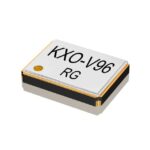 12.95149

The activity of extra discounts on wholesale prices is in full swing…
Please fill in your contact information and we will send you the latest wholesale price list.





