 ChipApex | Global Electronic Components Supplier
SEARCH
Search Product
Search Post
— IC芯片 | 连接器 | 传感器 | 被动器件 —
Search productSearch post
— IC芯片 | 连接器 | 传感器 | 被动器件 —
Consult the customer manager about the wholesale price.
consultation hotline:86-132-6715-2157
email:[email protected]
Contact the product manager for consultation. One-stop consultation is available.
Do you want a lower wholesale price? Please send us your inquiry and we will reply immediately.
The 123NQ100-1 is a high-speed ultra-fast recovery rectifier manufactured by SMC Diode Solutions. This component utilizes a planar epitaxial construction to ensure robust performance under demanding electrical conditions. It is designed for applications requiring rapid switching capabilities and low reverse leakage current. The device features a non-repetitive peak forward surge capability suitable for inductive load switching. Its thermal characteristics support operation in environments with significant heat dissipation requirements, maintaining reliability during continuous conduction cycles.
Verify the specific suffix codes on the ordering information to confirm package type and tape/reel specifications. Ensure that the maximum ratings listed in the official datasheet align with your circuit's peak inverse voltage and average forward current requirements. Cross-reference the thermal resistance values with your heatsinking design to prevent junction temperature exceedance during operation.
Select this component when ultra-fast recovery times are critical to minimize switching losses and electromagnetic interference. Evaluate the reverse recovery charge parameters against your switching frequency to ensure optimal efficiency. Consider the thermal management strategy required to maintain the junction temperature within safe operating limits under full load conditions.
This part belongs to the NQ series of ultra-fast recovery rectifiers from SMC Diode Solutions. The series is engineered for modern power electronics where speed and efficiency are paramount. These devices represent an evolution from standard fast recovery diodes, offering superior performance in high-frequency applications common in contemporary industrial and consumer power systems.
Consult official substitution guides for compatible alternatives. Verify that any replacement matches the pinout configuration and exceeds the original voltage and current ratings. Ensure the substitute device offers equal or better reverse recovery time to maintain circuit timing and efficiency integrity.
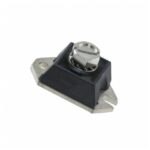 123NQ100-1
The activity of extra discounts on wholesale prices is in full swing…
Please fill in your contact information and we will send you the latest wholesale price list.





