ChipApex | Global Electronic Components Supplier
SEARCH
Search Product
Search Post
— IC芯片 | 连接器 | 传感器 | 被动器件 —
Search productSearch post
— IC芯片 | 连接器 | 传感器 | 被动器件 —
Consult the customer manager about the wholesale price.
consultation hotline:86-132-6715-2157
email:[email protected]
Contact the product manager for consultation. One-stop consultation is available.
Do you want a lower wholesale price? Please send us your inquiry and we will reply immediately.
The 125NQ015R-1 is a 125 Ampere, 150 Volt fast recovery rectifier diode manufactured by SMC Diode Solutions. It utilizes the NPT (Non-Punch Through) planar chip technology and is housed in a TO-247AD package. The device features a maximum average forward rectified current of 125A at a case temperature of 130°C and a peak repetitive reverse voltage of 150V. Key electrical characteristics include a maximum forward voltage drop of 1.15V at 125A and a typical reverse recovery time of 60ns. This component is designed for high-efficiency power conversion applications requiring robust performance under high thermal stress.
Verify the specific suffix 'R' indicates tape and reel packaging if required for automated assembly. Confirm the manufacturer datasheet for exact thermal resistance values and mounting torque specifications before integration. Ensure compatibility with heat sink materials and surface treatments to maintain optimal thermal performance during operation.
Select this component when high current handling and fast switching speeds are critical. Compare the forward voltage drop against system efficiency requirements. Verify that the operating junction temperature range aligns with the application's thermal management capabilities. Consider the package size constraints relative to available board space or chassis mounting options.
This diode belongs to the NQ series of fast recovery rectifiers from SMC Diode Solutions. The series is engineered for industrial and automotive power electronics. It competes with other high-current Schottky and fast recovery diodes in similar voltage and current ratings. The TO-247AD package provides a balance between current capacity and thermal dissipation for medium-to-high power designs.
Check for direct pin-compatible alternatives with matching voltage and current ratings. Verify reverse recovery time and forward voltage specifications to ensure circuit performance is not degraded. Confirm package dimensions and terminal configurations match existing PCB layouts or heatsink interfaces.
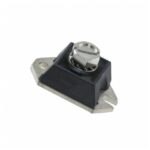 125NQ015R-1
The activity of extra discounts on wholesale prices is in full swing…
Please fill in your contact information and we will send you the latest wholesale price list.