 ChipApex | Global Electronic Components Supplier
SEARCH
Search Product
Search Post
— IC芯片 | 连接器 | 传感器 | 被动器件 —
Search productSearch post
— IC芯片 | 连接器 | 传感器 | 被动器件 —
Consult the customer manager about the wholesale price.
consultation hotline:86-132-6715-2157
email:[email protected]
Contact the product manager for consultation. One-stop consultation is available.
Do you want a lower wholesale price? Please send us your inquiry and we will reply immediately.
The Renesas Electronics 1339A-31DVGI8 is a low-power serial real-time clock (RTC) designed for precise timekeeping in embedded systems. It features an I2C serial interface for data transfer and includes two programmable time-of-day alarms alongside a programmable square-wave output. The device automatically adjusts for month lengths and leap years up to the year 2100. It operates within an industrial temperature range of -40°C to +85°C and supports supply voltages of 2.5V, 3.3V, 5V, and 5.5V. The component utilizes a built-in power-sense circuit to detect failures and switch to backup supplies, ensuring continuous operation with minimal current consumption.
Verify the specific suffix 'A' against official Renesas documentation to confirm pinout compatibility and electrical characteristics relative to standard variants. Confirm moisture sensitivity level and reflow soldering profiles prior to assembly. Ensure the selected package matches the intended PCB footprint and thermal management strategy. Validate that the I2C address configuration meets system bus requirements.
Select this component when a robust RTC with integrated calendar logic and low standby current is required. The I2C interface simplifies microcontroller integration compared to parallel alternatives. Consider the operating voltage range to ensure compatibility with the host system's power rails. Evaluate the need for dual alarms if complex scheduling functions are necessary for the application.
This part belongs to the Renesas 1339 series of serial real-time clocks. The series is characterized by its low power consumption and comprehensive timekeeping features including leap-year compensation. These devices are widely used in applications where maintaining accurate time during power outages is critical. The 1339 family offers various package options to suit different space constraints.
Consult official Renesas substitution guides for verified equivalents. Cross-reference pinouts and electrical specifications carefully when considering alternative RTCs from other manufacturers. Ensure that any substitute component supports the same I2C protocol and voltage levels.
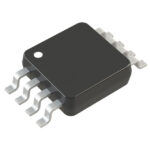 1339A-31DVGI8
The activity of extra discounts on wholesale prices is in full swing…
Please fill in your contact information and we will send you the latest wholesale price list.





