 ChipApex | Global Electronic Components Supplier
SEARCH
Search Product
Search Post
— IC芯片 | 连接器 | 传感器 | 被动器件 —
Search productSearch post
— IC芯片 | 连接器 | 传感器 | 被动器件 —
Consult the customer manager about the wholesale price.
consultation hotline:86-132-6715-2157
email:[email protected]
Contact the product manager for consultation. One-stop consultation is available.
Do you want a lower wholesale price? Please send us your inquiry and we will reply immediately.
The Renesas Electronics 1339D-31DVGI8 is a Real-Time Clock (RTC) component belonging to the 1339 series. It functions as a serial I2C interface RTC designed for precise timekeeping applications. The device is manufactured by Renesas Electronics and falls under the sub-category of Clock & Timer ICs. It is supplied in a Reel packaging format with a factory pack quantity of 2500 units. The component exhibits moisture sensitivity, requiring appropriate handling during storage and assembly processes.
Verify availability status directly with authorized distributors or the manufacturer, as supply conditions may vary. Confirm RoHS compliance details through official documentation prior to procurement. Ensure handling procedures account for the specified moisture sensitivity level to prevent damage during manufacturing. Validate the specific ordering suffix against current datasheets to confirm package and performance characteristics match design requirements.
Select this component when an I2C-based real-time clock solution from the Renesas 1339 family is required. Consider the Reel packaging constraint for automated assembly lines. Verify that the system design accommodates the moisture sensitivity classification. Compare against other members of the 1339 series if alternative pinouts or features are needed. Ensure the I2C interface compatibility with the host microcontroller.
This part belongs to the broader Renesas 1339 series of real-time clocks. Related components in this ecosystem include variants such as the 1339-31DVGI and other models like the 1337AGDVGI8 and 1338B-18DVGI8. These parts share common family characteristics but differ in specific packages, interfaces, or integrated features. The series is categorized under Clock & Timer ICs within Renesas's product portfolio.
Publicly confirmed substitute part numbers are not available in the provided source material. Evaluate cross-referencing with other 1339 series variants or similar I2C RTCs from Renesas based on specific electrical and mechanical constraints.
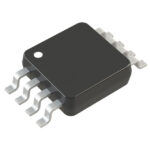 1339D-31DVGI8
The activity of extra discounts on wholesale prices is in full swing…
Please fill in your contact information and we will send you the latest wholesale price list.





