 ChipApex | Global Electronic Components Supplier
SEARCH
Search Product
Search Post
— IC芯片 | 连接器 | 传感器 | 被动器件 —
Search productSearch post
— IC芯片 | 连接器 | 传感器 | 被动器件 —
Consult the customer manager about the wholesale price.
consultation hotline:86-132-6715-2157
email:[email protected]
Contact the product manager for consultation. One-stop consultation is available.
Do you want a lower wholesale price? Please send us your inquiry and we will reply immediately.
The Renesas Electronics Corporation model 14222R-800 is the FT 3120-E4P40 Free Topology Smart Transceiver. It integrates a Neuron 3120 network processor core with an ANSI/CEA 709.3-1999 compliant twisted pair transceiver in a 44-lead TQFP package. The device supports a maximum input clock of 40MHz and includes 4Kbytes of embedded EEPROM, 2Kbytes of RAM, and 12Kbytes of ROM. It operates at 5V with an operating temperature range of -40 to +85°C. The component provides a transmission speed of 78 kilobits per second and complies with RoHS Directive 2002/95/EC.
Verify that the specific ordering suffix matches the required firmware version and packaging configuration. Confirm compliance requirements such as RoHS status if applicable to the target market. Ensure the design includes the mandatory external FT-X1 or FT-X2 communication transformer, as the IC cannot function independently. Check datasheet notes regarding oscillator stabilization times and thermal constraints during operation.
Select this model when a compact 44-lead TQFP package is preferred over the 32-lead SOIC option. Choose this variant for applications requiring up to 4Kbytes of application code storage within the embedded EEPROM. Ensure the host design can support the 40MHz maximum clock frequency and provides the necessary external transformer interface. Verify that the application does not require external memory expansion, which is a feature of the FT 3150 series.
This component belongs to the FT 3120 and FT 3150 Free Topology Smart Transceiver family produced by Echelon Corporation, now part of Renesas Electronics. These devices are designed to create low-cost smart transceivers on a chip for LonWorks networks. The FT 3120 variant specifically targets cost-sensitive designs needing integrated processing and networking capabilities without external memory dependencies.
The FT 3120-E4S40 (Model 14212R-500) serves as a pin-compatible alternative in a 32-lead SOIC package. Designers must ensure the PCB layout accommodates the different package dimensions when substituting between the SOIC and TQFP variants. Both versions share identical electrical characteristics and firmware capabilities.
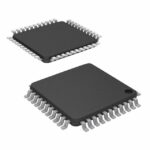 14222R-800
The activity of extra discounts on wholesale prices is in full swing…
Please fill in your contact information and we will send you the latest wholesale price list.





