 ChipApex | Global Electronic Components Supplier
SEARCH
Search Product
Search Post
— IC芯片 | 连接器 | 传感器 | 被动器件 —
Search productSearch post
— IC芯片 | 连接器 | 传感器 | 被动器件 —
Consult the customer manager about the wholesale price.
consultation hotline:86-132-6715-2157
email:[email protected]
Contact the product manager for consultation. One-stop consultation is available.
Do you want a lower wholesale price? Please send us your inquiry and we will reply immediately.
The Würth Elektronik 14230234500 is a Triac and SCR output optocoupler from the WL-OCTR series. It features a PhotoTriac output with random phase triggering capability, suitable for AC load control applications. The device provides electrical isolation with an insulation voltage of 3750 Vrms. It operates within a peak repetitive off-state voltage (VDRM) of 400 V and supports a maximum forward current of 60 mA. The component is housed in a SOP-4 surface-mount package and functions reliably across a temperature range of -40°C to +100°C.
Verify the specific part number suffix against official Wurth Elektronik documentation to confirm pinout and electrical characteristics. Ensure compatibility with existing PCB footprints and thermal management requirements. Cross-reference datasheet parameters such as isolation voltage and trigger current with system design specifications before procurement.
Select this component when random phase triggering is required for AC loads rather than zero-crossing switching. Consider the 400 V off-state voltage rating relative to the line voltage and transient spikes in the application. Evaluate the SOP-4 package size against available board space and soldering capabilities.
This component belongs to the WL-OCTR series of optocouplers designed for industrial and consumer AC switching applications. It integrates an infrared emitting diode with a silicon photo-triac on a single chip, providing galvanic isolation. The series is engineered for reliability in environments requiring robust electrical isolation and compact form factors.
Check for direct substitutes within the WL-OCTR family that may offer different voltage ratings or packaging options. Verify pin-to-pin compatibility and electrical parameter equivalence before substituting with components from other manufacturers.
No, this model utilizes random phase triggering, meaning it does not include zero-crossing circuitry.
The maximum operating temperature is +100°C.
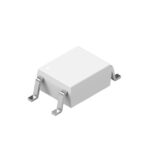 14230234500
The activity of extra discounts on wholesale prices is in full swing…
Please fill in your contact information and we will send you the latest wholesale price list.




