 ChipApex | Global Electronic Components Supplier
SEARCH
Search Product
Search Post
— IC芯片 | 连接器 | 传感器 | 被动器件 —
Search productSearch post
— IC芯片 | 连接器 | 传感器 | 被动器件 —
Consult the customer manager about the wholesale price.
consultation hotline:86-132-6715-2157
email:[email protected]
Contact the product manager for consultation. One-stop consultation is available.
Do you want a lower wholesale price? Please send us your inquiry and we will reply immediately.
The Würth Elektronik part number 14230336011 is a Triac Output Optoisolator belonging to the WL-OCTR series. It features a Zero Crossing detection mechanism and is housed in a 6-pin DIP package. The device provides an isolation voltage of 5000Vrms for one channel. Key electrical specifications include a Peak Repetitive Off-State Voltage (VDRM) of 250V and a minimum trigger current of 5mA. This component is designed for use in general electronic equipment applications requiring triac control with zero-crossing functionality.
Verify the specific datasheet version for the WL-OCTR series to confirm mechanical dimensions and thermal characteristics. Ensure that the 250V VDRM rating meets the requirements of the target AC line voltage. Confirm compliance with REACH and RoHS standards if required by the end application. Cross-reference the 6-DIP package outline against PCB footprint libraries before finalizing design integration.
Select this component when zero-crossing switching is required to minimize inrush currents and noise generation in AC loads. The 5000Vrms isolation makes it suitable for safety-critical interfaces between low-voltage control logic and high-voltage AC mains. Consider the 250V voltage rating carefully, as it limits the maximum peak voltage of the controlled AC circuit. The DIP-6 package facilitates through-hole mounting on standard printed circuit boards.
This optocoupler is part of the WL-OCTR family from Würth Elektronik, which specializes in triac output devices. These components integrate an infrared emitting diode with a triac output detector on a single chip. The series is engineered to provide reliable switching performance with built-in zero-crossing detection, distinguishing it from random-phase triac optocouplers used for phase-angle control applications.
Direct replacements must match the 6-DIP package, 5000Vrms isolation, and 250V VDRM rating. Verify that substitute parts also feature zero-crossing detection to maintain system noise performance. Check compatibility of the trigger current specification with the driving circuit capabilities.
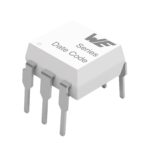 14230336011
The activity of extra discounts on wholesale prices is in full swing…
Please fill in your contact information and we will send you the latest wholesale price list.





