 ChipApex | Global Electronic Components Supplier
SEARCH
Search Product
Search Post
— IC芯片 | 连接器 | 传感器 | 被动器件 —
Search productSearch post
— IC芯片 | 连接器 | 传感器 | 被动器件 —
Consult the customer manager about the wholesale price.
consultation hotline:86-132-6715-2157
email:[email protected]
Contact the product manager for consultation. One-stop consultation is available.
Do you want a lower wholesale price? Please send us your inquiry and we will reply immediately.
The Würth Elektronik 14230424110 is a WL-OCTR series optocoupler featuring a Triac output stage. It provides electrical isolation with a rated insulation voltage of 5000 Vrms. The device utilizes a 4-pin DIP-M package for surface or through-hole mounting. Key electrical characteristics include a peak repetitive off-state voltage (VDRM) of 400 V and zero-crossing detection functionality to minimize electromagnetic interference during switching. The input side consists of an infrared LED, while the output side integrates a Triac switch.
Verify component authenticity by checking manufacturer markings against official datasheet specifications. Confirm package type matches the required PCB footprint. Ensure compliance with RoHS and REACH standards if applicable to your manufacturing region. Cross-reference the full part number to avoid confusion with similar WL-OCTR variants that may differ in isolation voltage or current ratings.
Select this component when zero-crossing switching is required to reduce electrical noise in AC circuits. The 400 V rating suits low-voltage AC applications. Verify that the load current does not exceed the Triac's continuous on-state current limits. Consider thermal management requirements based on the expected duty cycle and ambient temperature conditions for reliable long-term operation.
This component belongs to the WL-OCTR family of optocouplers from Würth Elektronik. These devices are designed for general-purpose isolation tasks where AC switching is necessary. The series emphasizes safety compliance and noise reduction through integrated zero-crossing technology, making it suitable for consumer and industrial electronics requiring reliable AC control.
Check for direct substitutes within the WL-OCTR series that match the 5000 Vrms isolation and 400 V VDRM specifications. Ensure any replacement maintains the same 4-pin DIP-M package dimensions and pinout configuration. Verify that alternative parts also feature zero-crossing detection if noise suppression is critical to the application design.
The zero-crossing feature ensures the Triac switches on only when the AC voltage crosses zero, minimizing inrush current and reducing electromagnetic interference (EMI) generated during switching.
The peak repetitive off-state voltage (VDRM) is rated at 400 V, defining the maximum voltage the output can block when in the off state.
Yes, the device provides an isolation voltage rating of 5000 Vrms between the input LED and the output Triac, suitable for safety-critical isolation barriers.
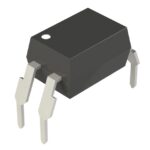 14230424110
The activity of extra discounts on wholesale prices is in full swing…
Please fill in your contact information and we will send you the latest wholesale price list.





