ChipApex | Global Electronic Components Supplier
SEARCH
Search Product
Search Post
— IC芯片 | 连接器 | 传感器 | 被动器件 —
Search productSearch post
— IC芯片 | 连接器 | 传感器 | 被动器件 —
Consult the customer manager about the wholesale price.
consultation hotline:86-132-6715-2157
email:[email protected]
Contact the product manager for consultation. One-stop consultation is available.
Do you want a lower wholesale price? Please send us your inquiry and we will reply immediately.
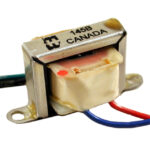
The Hammond Manufacturing 145N is a chassis-mount audio transformer designed for driver applications within the 143-146 series. It features a center-tapped primary winding configuration with an impedance of 10,000 ohms per side (10kCT/10kCT). The unit utilizes a steel core construction to ensure stable magnetic performance and includes a protective metal shield to minimize electromagnetic interference. This component is engineered for robust operation in professional audio environments requiring precise signal coupling.
Verify that the specific order matches the 10kCT/10kCT impedance specification required by the target circuit design. Confirm the chassis-mount style aligns with available panel space. Ensure compatibility with existing thermal management strategies, as transformers generate heat during operation. Cross-reference datasheet pinouts against the intended PCB or wiring harness layout before finalizing procurement.
Select this model when a high-impedance center-tapped primary is necessary for tube-based driver circuits. Evaluate the physical dimensions to ensure the chassis-mount footprint fits the enclosure constraints. Consider the shielding requirements if the application operates in high-noise environments. Compare against other series members if different impedance ratios are needed for specific load matching scenarios.
This component belongs to the Hammond 143-146 series of audio transformers, which are widely used in vintage and modern tube amplifier designs. The series offers various impedance configurations tailored for different speaker loads and driver types. The 145N specifically addresses applications requiring a 10k center-tapped primary, providing a standardized solution for common audio engineering challenges in power amplification stages.
Direct substitutes include other Hammond models from the 143-146 series with identical 10kCT primary impedance. Verify that alternative components match the secondary impedance and physical mounting hole patterns to ensure mechanical compatibility without modifying the chassis structure.

The activity of extra discounts on wholesale prices is in full swing…
Please fill in your contact information and we will send you the latest wholesale price list.