 ChipApex | Global Electronic Components Supplier

SEARCH
Search Product
Search Post
— IC芯片 | 连接器 | 传感器 | 被动器件 —
Search productSearch post
— IC芯片 | 连接器 | 传感器 | 被动器件 —
Consult the customer manager about the wholesale price.
consultation hotline:86-132-6715-2157
email:[email protected]
Contact the product manager for consultation. One-stop consultation is available.
Do you want a lower wholesale price? Please send us your inquiry and we will reply immediately.
The Würth Elektronik 150141YS73113 is a single-color yellow surface-mount LED from the WL-SMTW series. It features a 2-PLCC (3528) package with dimensions of 3.20mm length, 2.80mm width, and a maximum height of 2.10mm. The component emits light at a main wavelength of 590nm and a peak wavelength of 592nm. It has a typical forward voltage of 2.2V to 2.4V and a luminous intensity of 1000mcd. The lens is colorless, water-clear, and round with a flat top, providing a 120-degree viewing angle. It operates within a temperature range of -40°C to +85°C and is RoHS compliant.
Verify the specific suffix '73113' against the official Wurth Elektronik datasheet to confirm exact binning parameters for forward voltage and luminous intensity. Ensure that the required moisture sensitivity level (MSL 3) and reflow soldering profiles are compatible with your manufacturing process. Confirm that the 3528 package dimensions align with your PCB land pattern design before finalizing procurement orders.
Select this component when a standard yellow indicator with moderate brightness is required in a compact surface-mount form factor. The 1000mcd output suits applications needing clear visibility without excessive power consumption. Consider the 120-degree viewing angle for broad visibility requirements. Compare with lower or higher intensity variants in the WL-SMTW series if specific brightness thresholds differ from project needs.
This part belongs to the Würth Elektronik WL-SMTW series, which focuses on high-reliability single-color LEDs for general-purpose indication. The series utilizes standard SMD packaging to support efficient surface-mount technology production lines. The 150141YS73113 specifically targets the yellow spectrum segment, offering consistent performance for non-critical signaling tasks in commercial electronics.
Direct substitutes include other Wurth Elektronik yellow LEDs in the 3528 package such as 150141YS73100 (300mcd) or 150141AS73113 (amber). Verify electrical compatibility including forward voltage and current ratings before substitution. Cross-reference mechanical dimensions to ensure fit within the existing PCB footprint.
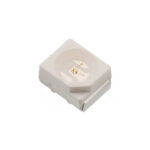 150141YS73113

The activity of extra discounts on wholesale prices is in full swing…
Please fill in your contact information and we will send you the latest wholesale price list.







