ChipApex | Global Electronic Components Supplier
SEARCH
Search Product
Search Post
— IC芯片 | 连接器 | 传感器 | 被动器件 —
Search productSearch post
— IC芯片 | 连接器 | 传感器 | 被动器件 —
Consult the customer manager about the wholesale price.
consultation hotline:86-132-6715-2157
email:[email protected]
Contact the product manager for consultation. One-stop consultation is available.
Do you want a lower wholesale price? Please send us your inquiry and we will reply immediately.
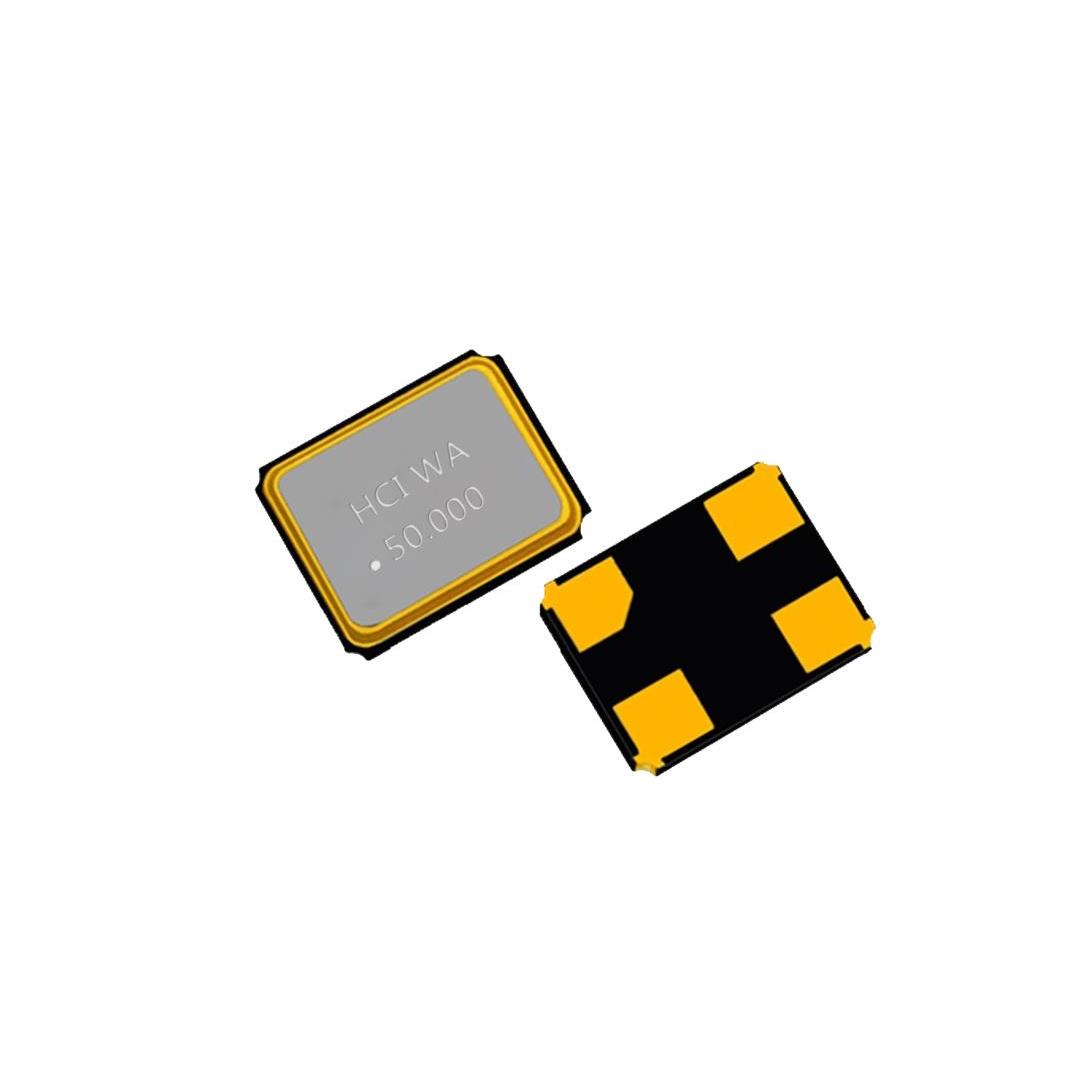
The 1521H-50.000GWVDTSTK is a standard crystal oscillator (XO) manufactured by Suzhou Hangjing Elec&Tech Co.,Ltd. It operates at a frequency of 50 MHz and utilizes an HCMOS output signal type. The device supports a supply voltage range of 1.8V to 3.3V and includes enable/disable functionality for power management. It is housed in a compact 4-SMD, No Lead package, designed for surface-mount applications in electronic circuits requiring precise clock signals.
Verify the complete part number including suffixes against official manufacturer documentation to ensure correct voltage, load capacitance, and tolerance specifications. Confirm that the supplier provides traceability to the original manufacturer, Suzhou Hangjing Elec&Tech Co.,Ltd. Ensure compliance with RoHS standards if required by your assembly process. Cross-reference the datasheet for specific operating temperature ranges and aging characteristics before finalizing procurement orders.
Select this component when a 50 MHz HCMOS clock source is required within a 1.8V to 3.3V supply environment. The enable/disable feature makes it suitable for battery-powered devices requiring power optimization. The 4-SMD package is appropriate for high-density PCB layouts. Ensure the application does not require lower jitter or higher stability than standard XO specifications provide.
This oscillator belongs to the 1521H series from Suzhou Hangjing Elec&Tech Co.,Ltd, founded in 2014. The company specializes in quartz frequency control components, including crystals, oscillators, and filters. This specific model represents a standard frequency solution targeting consumer electronics and communication devices where moderate precision and low cost are prioritized over ultra-high stability.
Compatible substitutes include other 50 MHz HCMOS XO models in 4-SMD packages from the same manufacturer, such as the 1521H-19.200KWVDTSK variant, provided the frequency requirement is adjusted accordingly. Verify pin compatibility and electrical parameters before substitution.
The output waveform is HCMOS.
Yes, it features an enable/disable function.
 1521H-50.000GWVDTSTK
The activity of extra discounts on wholesale prices is in full swing…
Please fill in your contact information and we will send you the latest wholesale price list.