ChipApex | Global Electronic Components Supplier
SEARCH
Search Product
Search Post
— IC芯片 | 连接器 | 传感器 | 被动器件 —
Search productSearch post
— IC芯片 | 连接器 | 传感器 | 被动器件 —
Consult the customer manager about the wholesale price.
consultation hotline:86-132-6715-2157
email:[email protected]
Contact the product manager for consultation. One-stop consultation is available.
Do you want a lower wholesale price? Please send us your inquiry and we will reply immediately.
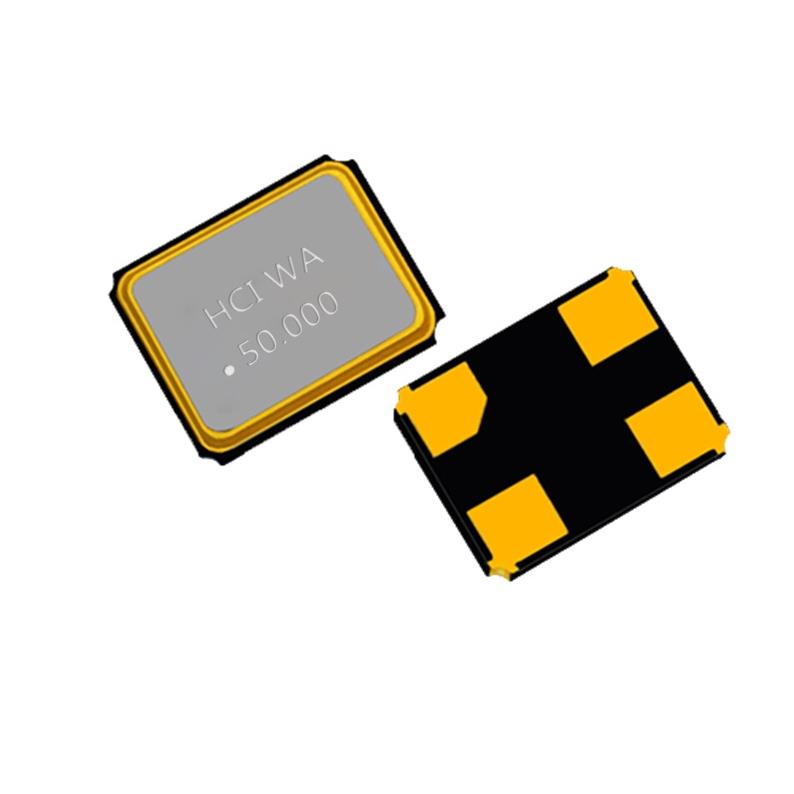
The 1522H-32.768JWVDTSK is a standard crystal oscillator (XO) manufactured by Suzhou Hangjing Elec&Tech Co., Ltd. It operates at a frequency of 32.768 kHz with an HCMOS output signal type. The device supports a supply voltage range of 1.8V to 3.3V and features an enable/disable function for power management. It offers a frequency stability of ±30ppm and functions within an operating temperature range of -40°C to 85°C. The component is housed in a compact 2520 surface-mount package with no lead construction, measuring 0.022 inches (0.55mm) in maximum seated height.
Verify the specific ordering suffix against official manufacturer documentation to ensure correct voltage and package specifications. Confirm that the enable/disable functionality aligns with system power requirements. Check compatibility with the target operating temperature range of -40°C to 85°C. Ensure the HCMOS output level matches the receiving circuit's input thresholds. Validate the 2520 package dimensions against PCB footprint constraints before finalizing procurement.
Select this component when a precise 32.768 kHz reference is required for timekeeping or low-speed synchronization. The ±30ppm stability suits applications where moderate accuracy is sufficient. The wide voltage range allows flexibility in power supply design. Consider the enable pin if dynamic power saving is necessary. The small form factor is ideal for space-constrained portable or embedded designs requiring reliable quartz-based timing.
This oscillator belongs to the standard XO series from Suzhou Hangjing, focusing on quartz frequency control units. The company specializes in research and production of such components for communication and industrial sectors. This specific model provides a cost-effective solution for basic timing needs, contrasting with higher-precision TCXOs or VCXOs offered in their broader portfolio.
Direct substitutes must match the 32.768 kHz frequency, HCMOS output, and 2520 package. Verify equivalent voltage ranges and enable/disable functionality. Check for identical stability and temperature ratings. Cross-reference pinouts and electrical characteristics to ensure seamless integration without circuit modification.
 1522H-32.768JWVDTSK
The activity of extra discounts on wholesale prices is in full swing…
Please fill in your contact information and we will send you the latest wholesale price list.