ChipApex | Global Electronic Components Supplier
SEARCH
Search Product
Search Post
— IC芯片 | 连接器 | 传感器 | 被动器件 —
Search productSearch post
— IC芯片 | 连接器 | 传感器 | 被动器件 —
Consult the customer manager about the wholesale price.
consultation hotline:86-132-6715-2157
email:[email protected]
Contact the product manager for consultation. One-stop consultation is available.
Do you want a lower wholesale price? Please send us your inquiry and we will reply immediately.
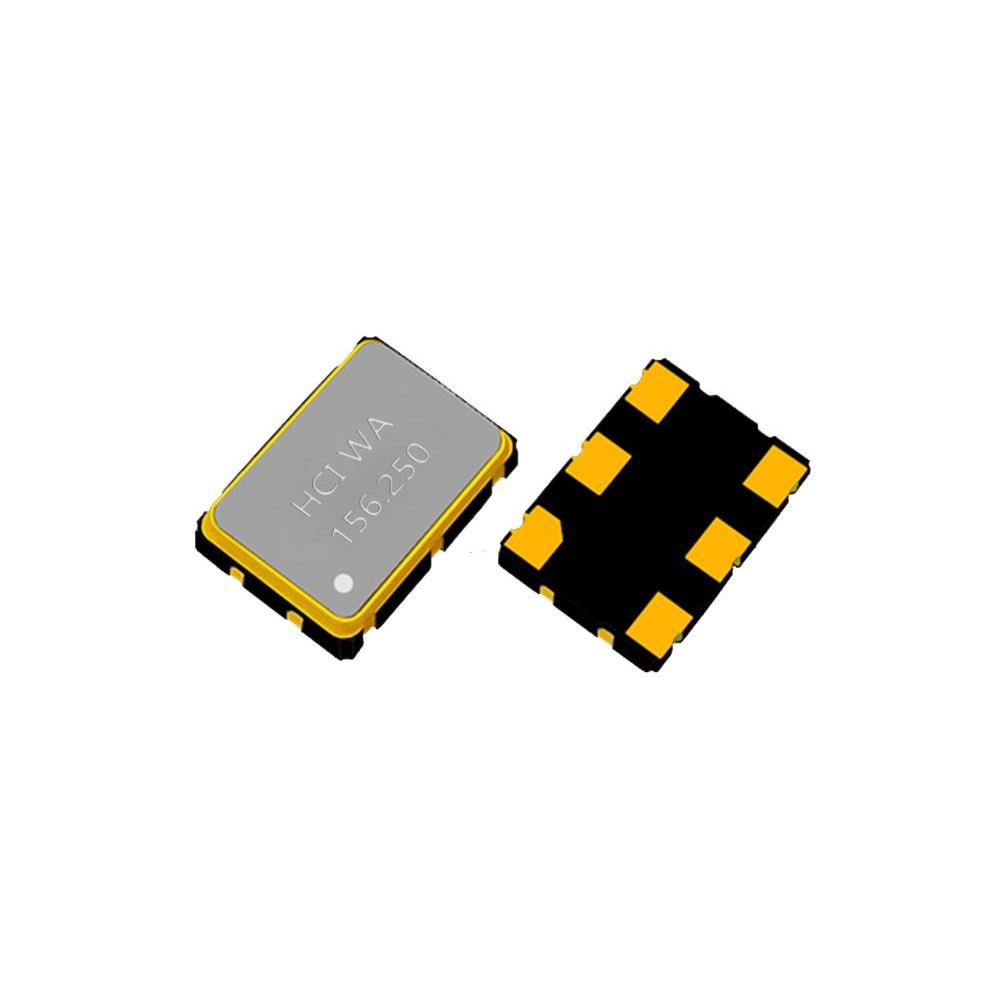
The 1532D-80.000J18DTSTK is a surface-mount crystal oscillator (XO) manufactured by Suzhou Hangjing Elec&Tech Co., Ltd. It operates at a frequency of 80 MHz and utilizes LVDS output signaling for high-speed digital applications. The component is housed in a standard SMD package, ensuring compatibility with automated assembly processes. It is RoHS compliant, indicating adherence to environmental standards regarding restricted hazardous substances. The device features a Moisture Sensitivity Level (MSL) rating of 1, which signifies unlimited floor life under standard conditions prior to board mounting.
Verify the specific operating voltage and load capacitance requirements against your circuit design before procurement. Confirm that the LVDS output level matches your receiver inputs. Ensure storage conditions respect the MSL 1 rating to prevent moisture absorption issues during soldering. Check for any specific handling instructions provided in the official datasheet to maintain component integrity.
Select this model when an 80 MHz clock source with LVDS outputs is required in a surface-mount form factor. Consider the thermal characteristics and stability specifications relative to your application environment. Verify that the physical footprint aligns with your PCB layout constraints. Ensure the manufacturing date code meets your project timeline requirements.
This component belongs to the 1532D series of crystal oscillators from Suzhou Hangjing. The series offers various frequencies and output types tailored for different timing needs. The 1532D line is designed for reliability in consumer and industrial electronics. This specific part number denotes the 80 MHz variant with LVDS signaling capabilities.
Direct substitutes must match the 80 MHz frequency, LVDS output type, and SMD package dimensions. Verify pinout compatibility and electrical parameters such as supply voltage and current consumption. Cross-reference with other manufacturers offering similar LVDS oscillators if availability is an issue.
 1532D-80.000J18DTSTK
The activity of extra discounts on wholesale prices is in full swing…
Please fill in your contact information and we will send you the latest wholesale price list.