ChipApex | Global Electronic Components Supplier
SEARCH
Search Product
Search Post
— IC芯片 | 连接器 | 传感器 | 被动器件 —
Search productSearch post
— IC芯片 | 连接器 | 传感器 | 被动器件 —
Consult the customer manager about the wholesale price.
consultation hotline:86-132-6715-2157
email:[email protected]
Contact the product manager for consultation. One-stop consultation is available.
Do you want a lower wholesale price? Please send us your inquiry and we will reply immediately.
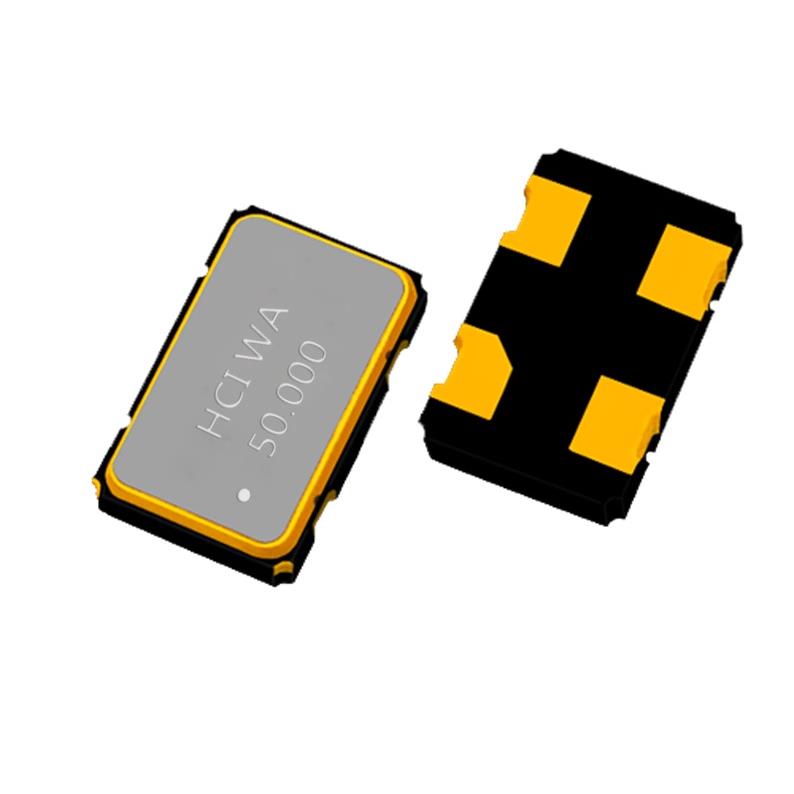
The 1553H-64.000G33DTK is a quartz crystal oscillator manufactured by Suzhou Hangjing Elec&Tech Co., Ltd. It operates at a frequency of 64 MHz with an HCMOS output signal type. The device is supplied at 3.3V and features a frequency stability of ±30ppm over the operating temperature range of -40°C to +85°C. The maximum supply current is 20mA. It utilizes a 5032 surface-mount package configuration with four no-lead solder pads for mounting.
Verify the specific ordering suffix matches the required frequency tolerance and load capacitance specifications for your design. Confirm that the 5032 package dimensions align with your PCB footprint requirements. Ensure the 3.3V supply voltage is stable within the operational limits to maintain the specified ±30ppm frequency stability. Check for any specific reflow soldering profile recommendations provided by the manufacturer to ensure joint integrity during assembly processes.
Select this component when a 64 MHz HCMOS output is required for timing applications. Consider the ±30ppm stability specification against your system's jitter and phase noise requirements. Evaluate the 5032 package size relative to available board space constraints. Compare the 20mA current draw against your total power budget. Verify compatibility with the 3.3V logic levels used in your target circuitry before finalizing the part selection.
This oscillator belongs to the 1553H series from Suzhou Hangjing, which focuses on standard HCMOS oscillators. The series supports various frequencies and packages, serving computing and communication sectors. The 1553H-64.000G33DTK specifically addresses needs for moderate stability industrial-grade timing sources. It complements other Hangjing products like TCXOs and VCXOs for higher precision or tunable applications.
Direct substitutes must match the 64 MHz frequency, HCMOS output, 3.3V supply, and 5032 package. Verify equivalent stability ratings of ±30ppm or better. Cross-reference pinouts and thermal characteristics if sourcing from alternative manufacturers. Ensure the replacement maintains the same operating temperature range of -40°C to +85°C for reliable performance.
 1553H-64.000G33DTK
The activity of extra discounts on wholesale prices is in full swing…
Please fill in your contact information and we will send you the latest wholesale price list.