 ChipApex | Global Electronic Components Supplier

SEARCH
Search Product
Search Post
— IC芯片 | 连接器 | 传感器 | 被动器件 —
Search productSearch post
— IC芯片 | 连接器 | 传感器 | 被动器件 —
Consult the customer manager about the wholesale price.
consultation hotline:86-132-6715-2157
email:[email protected]
Contact the product manager for consultation. One-stop consultation is available.
Do you want a lower wholesale price? Please send us your inquiry and we will reply immediately.
The Würth Elektronik 156125RV73000 is a dual-color surface-mount LED featuring green and red emitters in a 4-SMD bottom-entry package. It operates with a typical forward voltage of 2.1V for the green channel and 2V for the red channel, tested at 20mA each. The device emits light at peak wavelengths of 573nm (green) and 632nm (red), with main wavelengths of 571nm and 624nm respectively. Luminous intensity reaches 170mcd for green and 110mcd for red, providing a 120-degree viewing angle within a compact 3.20mm x 1.20mm footprint.
Verify the specific ordering suffix to confirm the exact color combination and lens transparency specifications. Ensure compatibility with standard reflow soldering profiles suitable for small surface-mount devices. Confirm that the 4-SMD bottom-entry package dimensions align with the designated PCB land pattern. Check RoHS compliance documentation for adherence to current environmental regulations before finalizing procurement orders.
Select this component when space constraints require a dual-color indicator within a minimal footprint. The bottom-entry design facilitates automated assembly processes compared to top-view alternatives. Consider the specific luminous intensity requirements for both colors to ensure adequate visibility under intended operating conditions. Verify that the forward voltage characteristics match the available drive circuitry capabilities for reliable operation.
This part belongs to the WL-SBRW series, representing Würth Elektronik's portfolio of specialized surface-mount LEDs. The series focuses on providing versatile optical solutions for modern electronic applications where size and performance are critical. As a discrete dual-color device, it offers a cost-effective alternative to separate single-color components while maintaining high reliability standards.
Direct substitutes include other Würth Elektronik dual-color SMD LEDs from the WL-SBRW family with matching pin configurations. Cross-reference mechanical dimensions and thermal characteristics to ensure board compatibility. Verify equivalent electrical parameters such as forward voltage and luminous intensity before implementing any alternative component in existing designs.
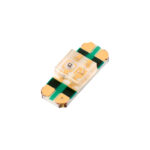 156125RV73000

The activity of extra discounts on wholesale prices is in full swing…
Please fill in your contact information and we will send you the latest wholesale price list.







