 ChipApex | Global Electronic Components Supplier
SEARCH
Search Product
Search Post
— IC芯片 | 连接器 | 传感器 | 被动器件 —
Search productSearch post
— IC芯片 | 连接器 | 传感器 | 被动器件 —
Consult the customer manager about the wholesale price.
consultation hotline:86-132-6715-2157
email:[email protected]
Contact the product manager for consultation. One-stop consultation is available.
Do you want a lower wholesale price? Please send us your inquiry and we will reply immediately.
The Hammond Manufacturing 160D28 is a low voltage power transformer designed for PCB mounting. It features dual primary windings rated for 115 VAC and 230 VAC operation at 50 Hz or 60 Hz frequencies. The secondary output provides 28 VAC center-tapped configuration with a current rating of 30 mA, delivering a total power capacity of 1 VA. The unit utilizes solder pin termination for secure board integration. Physical dimensions are 1.38 inches in length, 1 inch in width, and 0.83 inches in height. It operates within a temperature range of 0°C to +130°C.
Verify the specific part number suffix against official Hammond Manufacturing documentation to confirm exact electrical ratings and physical specifications. Ensure compatibility with existing PCB footprint and thermal management requirements before procurement. Confirm regulatory compliance status such as RoHS directives matches project constraints. Cross-reference datasheet revision dates to ensure access to the most current technical parameters and safety certifications.
Select this component when a compact, board-mount solution is required for stepping down standard mains voltages to low voltage levels. The dual primary winding allows flexibility for global deployment without changing hardware. Verify that the 1 VA power rating meets the load requirements of the target circuit. Consider the operating temperature range and physical dimensions to ensure fit within the designated enclosure space.
This transformer belongs to the Hammond 160 series, which focuses on low voltage power conversion for electronic equipment. The series offers various voltage configurations tailored for different industrial and commercial applications. These components are characterized by their robust construction and suitability for direct PCB mounting, providing reliable isolation between primary and secondary circuits.
Consult official Hammond Manufacturing substitution guides for verified equivalent models. Ensure any replacement maintains identical primary and secondary voltage ratings, current capacity, and physical mounting dimensions. Verify that alternative components meet the same thermal and regulatory standards.
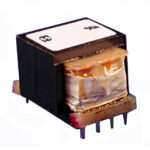 160D28
The activity of extra discounts on wholesale prices is in full swing…
Please fill in your contact information and we will send you the latest wholesale price list.




