 ChipApex | Global Electronic Components Supplier
SEARCH
Search Product
Search Post
— IC芯片 | 连接器 | 传感器 | 被动器件 —
Search productSearch post
— IC芯片 | 连接器 | 传感器 | 被动器件 —
Consult the customer manager about the wholesale price.
consultation hotline:86-132-6715-2157
email:[email protected]
Contact the product manager for consultation. One-stop consultation is available.
Do you want a lower wholesale price? Please send us your inquiry and we will reply immediately.
The Hammond Manufacturing 162F24 is a low-voltage power transformer designed for PCB mounting. It features dual primary windings rated for 115 VAC and 230 VAC operation at 50/60 Hz. The secondary configuration provides a center-tapped output of 24 VAC, delivering a current rating of 250 mA in series connection or 500 mA in parallel connection. With a power rating of 6 VA, this component utilizes a laminated core construction. Its physical dimensions are approximately 1.63 inches in length, 1.31 inches in width, and 1.31 inches in height, facilitating integration into compact electronic assemblies requiring isolated AC voltage conversion.
Verify the specific secondary current requirement (250 mA series vs. 500 mA parallel) against the application circuit design before procurement. Confirm that the PCB footprint matches the through-hole pin spacing of the 162F24. Ensure the operating environment temperature remains within the specified range to maintain insulation integrity and performance stability over the product lifecycle.
Select the 162F24 when a compact, board-mount solution is required for converting standard line voltages to a lower AC potential. Consider the 6 VA power limit to ensure the connected load does not exceed thermal ratings. Choose this model over chassis-mounted alternatives if space efficiency and direct PCB integration are prioritized over higher power capacities available in larger form factors.
This component belongs to the Hammond 162 Series, which specializes in low-voltage transformers for general-purpose industrial and commercial electronics. The series offers various voltage and wattage combinations tailored for PCB mounting. The 162F24 specifically addresses needs for moderate power isolation with a center-tapped secondary, distinguishing it from single-output or higher-wattage variants within the same manufacturer lineup.
Direct substitutes must match the 6 VA rating, 115/230 VAC primary, and 24 VAC CT secondary specifications. Verify that any replacement maintains the same PCB mounting footprint and pin configuration to ensure mechanical compatibility without requiring board redesign.
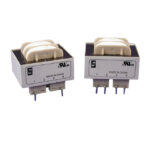 162F24
The activity of extra discounts on wholesale prices is in full swing…
Please fill in your contact information and we will send you the latest wholesale price list.




