 ChipApex | Global Electronic Components Supplier
SEARCH
Search Product
Search Post
— IC芯片 | 连接器 | 传感器 | 被动器件 —
Search productSearch post
— IC芯片 | 连接器 | 传感器 | 被动器件 —
Consult the customer manager about the wholesale price.
consultation hotline:86-132-6715-2157
email:[email protected]
Contact the product manager for consultation. One-stop consultation is available.
Do you want a lower wholesale price? Please send us your inquiry and we will reply immediately.
The Hammond Manufacturing 164D56 is a low voltage power transformer designed for printed circuit board mounting. It features a single primary winding rated for 115 VAC operation at 50/60 Hz frequencies. The secondary configuration provides a center-tapped output of 56 VAC with a maximum current rating of 20 mA, delivering a total power capacity of 1.1 VA. Constructed with a laminated core and through-hole solder pin termination, the unit measures 1.38 inches in length, 1 inch in width, and 1.19 inches in height. It operates within a temperature range of 0°C to +130°C.
Verify the specific manufacturer part number against official Hammond Manufacturing documentation to ensure accuracy. Confirm that the required electrical parameters, including voltage ratings and physical dimensions, align with the target application requirements before procurement. Cross-reference datasheets to validate compliance with relevant safety and environmental standards.
Select this component when a compact, low-profile transformer is required for direct PCB mounting. Ensure the application demands a 115VAC primary input and a 56VAC center-tapped secondary output. Verify that the 1.1 VA power rating and 20 mA current limit are sufficient for the load requirements. Consider the through-hole mounting style and operating temperature range during the design phase.
This component belongs to the Hammond Manufacturing 164 series of power transformers. The series offers various configurations tailored for low voltage applications requiring reliable isolation and efficient power transfer. These units are characterized by their robust construction and suitability for industrial and commercial electronic equipment where space constraints necessitate low-profile designs.
Consult official Hammond Manufacturing substitution guides for verified alternative part numbers. Do not assume functional equivalence based on generic specifications alone. Validate any potential substitute against the original datasheet to ensure compatibility with existing circuit layouts and performance requirements.
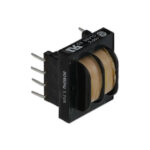 164D56
The activity of extra discounts on wholesale prices is in full swing…
Please fill in your contact information and we will send you the latest wholesale price list.




