 ChipApex | Global Electronic Components Supplier
SEARCH
Search Product
Search Post
— IC芯片 | 连接器 | 传感器 | 被动器件 —
Search productSearch post
— IC芯片 | 连接器 | 传感器 | 被动器件 —
Consult the customer manager about the wholesale price.
consultation hotline:86-132-6715-2157
email:[email protected]
Contact the product manager for consultation. One-stop consultation is available.
Do you want a lower wholesale price? Please send us your inquiry and we will reply immediately.
The Hammond Manufacturing 166J5 is an industrial control power transformer designed for chassis mounting. It features a single primary winding rated at 115 VAC and a single secondary winding providing 5 VAC with a center tap configuration. The unit has a power rating of 5 VA and supports a maximum secondary current of 1 A. Operating frequencies include both 50 Hz and 60 Hz. The device utilizes wire leads for termination and functions within a temperature range of 0°C to +130°C.
Verify that the required secondary voltage matches the specific 5V AC center-tapped specification, as other variants in the 166 series offer different voltages and wattage ratings. Confirm that the chassis mounting style and wire lead termination are compatible with the target enclosure design. Ensure the operating environment remains within the specified thermal limits to maintain performance and safety compliance.
Select this model when a precise 5V AC output with a center tap is required for low-power industrial applications. The 5 VA rating suits small control loads but may be insufficient for higher current demands; consider higher wattage models if load requirements exceed 1 A. Verify compatibility with both 50 Hz and 60 Hz input sources if frequency variability exists in the deployment environment.
The 166J5 belongs to the Hammond Manufacturing 166 series of industrial control transformers. This series provides various power ratings and voltage configurations tailored for general-purpose industrial use. Components in this family share common mounting styles and termination methods, ensuring consistency across different power requirements while maintaining standardized physical dimensions for easy integration into control panels.
Direct substitutes within the same series include the 166J25C, 166J6, and 166G8, though these differ significantly in power rating and secondary voltage specifications. Cross-series replacements require careful evaluation of electrical parameters and physical footprint constraints to ensure functional equivalence without modifying existing wiring or mechanical structures.
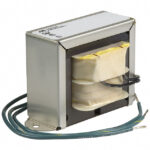 166J5
166J5
The activity of extra discounts on wholesale prices is in full swing…
Please fill in your contact information and we will send you the latest wholesale price list.




