 ChipApex | Global Electronic Components Supplier
SEARCH
Search Product
Search Post
— IC芯片 | 连接器 | 传感器 | 被动器件 —
Search productSearch post
— IC芯片 | 连接器 | 传感器 | 被动器件 —
Consult the customer manager about the wholesale price.
consultation hotline:86-132-6715-2157
email:[email protected]
Contact the product manager for consultation. One-stop consultation is available.
Do you want a lower wholesale price? Please send us your inquiry and we will reply immediately.
The Hammond Manufacturing 166M2 is a laminated core power transformer designed for chassis mounting. It features a single primary winding rated at 115V and a single secondary winding with center tap, providing 2.5V at 3A. The unit has a maximum power rating of 7.5VA and offers 2000Vrms isolation voltage. Physical dimensions are 71.37mm in length, 38.10mm in width, and a maximum height of 42.93mm. It utilizes wire lead termination and operates within a temperature range supported by its insulation class.
Verify the specific part number suffix against the manufacturer's current datasheet to ensure compatibility with required voltage and current specifications. Confirm that the chassis mounting holes align with the design enclosure. Check for RoHS compliance status if environmental regulations apply to the final assembly. Ensure wire lead lengths meet the system integration requirements before purchase.
Select this component when a low voltage, high current output is required from a standard 115V primary source. The 7.5VA rating suits small-scale industrial controls. Consider the physical footprint constraints due to the chassis mount design. Verify that the 2.5V center-tapped output matches the downstream circuit requirements. Compare thermal performance against ambient operating conditions.
This transformer belongs to the Hammond 166 series, which provides a range of industrial control transformers. The series includes various power ratings and voltage configurations to support different industrial automation needs. The 166M2 specifically addresses applications requiring low voltage outputs with moderate current capabilities. It is part of a standardized line of laminated core transformers known for reliability in harsh environments.
Direct substitutes include other Hammond 166 series models with matching electrical parameters. Cross-reference part numbers such as 166G16 or 166M10 only if voltage and current requirements differ. Ensure any replacement maintains the same chassis mounting dimensions and terminal type. Verify that the new component meets the same isolation and thermal standards.
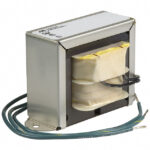 166M2
166M2
The activity of extra discounts on wholesale prices is in full swing…
Please fill in your contact information and we will send you the latest wholesale price list.




