 ChipApex | Global Electronic Components Supplier
SEARCH
Search Product
Search Post
— IC芯片 | 连接器 | 传感器 | 被动器件 —
Search productSearch post
— IC芯片 | 连接器 | 传感器 | 被动器件 —
Consult the customer manager about the wholesale price.
consultation hotline:86-132-6715-2157
email:[email protected]
Contact the product manager for consultation. One-stop consultation is available.
Do you want a lower wholesale price? Please send us your inquiry and we will reply immediately.
The Hammond Manufacturing 167R5 is an enclosed industrial power transformer designed for chassis mounting. It features a single primary winding rated at 115 VAC and a single secondary winding providing 5 VAC center-tapped output. The unit has a power rating of 40 VA with a secondary current capacity of 8 A. Operating frequencies are supported at 50 Hz and 60 Hz. Physical dimensions include a length of approximately 3.75 inches, width of 4.5 inches, and height of 4.56 inches. The device utilizes wire leads for termination and operates within a temperature range of 0°C to +130°C.
Verify the specific part number suffix against official Hammond Manufacturing documentation to confirm exact electrical ratings and physical specifications. Ensure that the ordering details match the required voltage and current parameters for the intended application. Cross-reference datasheet revisions to confirm compliance with current safety standards and RoHS directives before finalizing procurement orders.
Select this component when a low voltage, center-tapped secondary output is required for chassis-mounted industrial applications. Consider the 40 VA power rating and 8 A secondary current capacity to ensure adequate load handling. Verify that the 115 VAC primary input matches the available supply voltage and that the physical dimensions fit within the designated enclosure space.
The 167R5 belongs to the Hammond Manufacturing 167 Series of general-purpose power transformers. This series offers a wide range of power ratings from 6 VA to over 1600 VA in both open and enclosed styles. The 167 series is widely used in industrial automation and control equipment where reliable voltage transformation and electrical isolation are critical for system operation.
Consult Hammond Manufacturing catalogs for direct replacements within the 167 series or equivalent models from other manufacturers. Verify that substitute parts match the 115 VAC primary, 5 VAC CT secondary, and 40 VA rating. Ensure mechanical mounting hole patterns and lead lengths are compatible with existing assembly requirements.
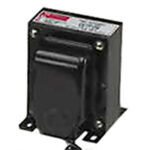 167R5
167R5
The activity of extra discounts on wholesale prices is in full swing…
Please fill in your contact information and we will send you the latest wholesale price list.




