ChipApex | Global Electronic Components Supplier
SEARCH
Search Product
Search Post
— IC芯片 | 连接器 | 传感器 | 被动器件 —
Search productSearch post
— IC芯片 | 连接器 | 传感器 | 被动器件 —
Consult the customer manager about the wholesale price.
consultation hotline:86-132-6715-2157
email:[email protected]
Contact the product manager for consultation. One-stop consultation is available.
Do you want a lower wholesale price? Please send us your inquiry and we will reply immediately.
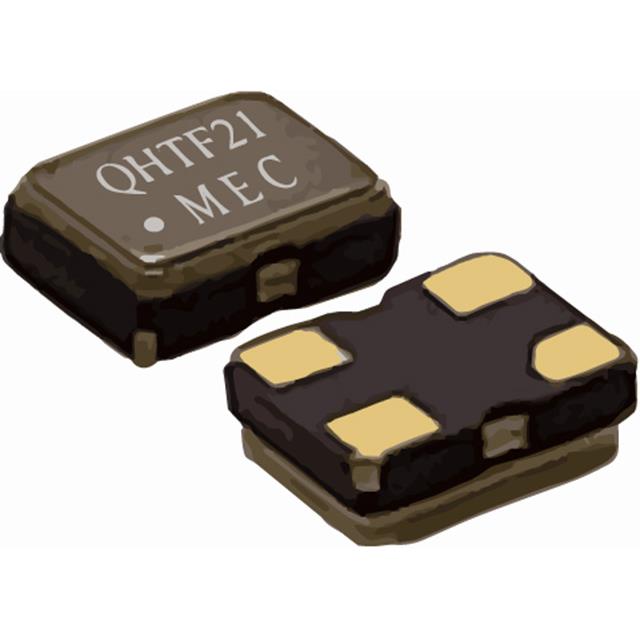
The 18QHTF21-106.83224-PD is a standard crystal oscillator (XO) manufactured by Mercury Electronics Ind. Co. Ltd. It operates at a fixed frequency of 106.83224 MHz and utilizes LVCMOS output logic. The device is powered by a 1.8V supply voltage with a maximum supply current of 28mA. It features a Standby (Power Down) function for energy management. The component is housed in a compact 4-SMD, No Lead package with dimensions of 2.0mm x 1.6mm. It supports surface mount mounting types and ensures frequency stability of ±50ppm across an operating temperature range of -40°C to 85°C.
Verify the specific ordering suffix against manufacturer documentation to ensure correct packaging and tape-and-reel specifications. Confirm that the 1.8V supply requirement aligns with target system power rails. Check for RoHS compliance status if environmental regulations apply. Ensure the 4-SMD no-lead package footprint matches PCB design constraints. Validate frequency tolerance requirements against system jitter budgets before finalizing procurement.
Select this component when a 106.83224 MHz clock signal is strictly required. The 1.8V operating voltage makes it suitable for modern low-power digital circuits. Consider the ±50ppm stability specification for applications sensitive to frequency drift. The wide industrial temperature range allows operation in varied environmental conditions. Evaluate the small 2.0x1.6mm footprint for space-constrained board layouts.
This part belongs to the Mercury Electronics 18QHTF21 series of surface-mount crystal oscillators. The series offers various frequencies with standardized LVCMOS outputs. Mercury Electronic Ind., Co., Ltd. specializes in quartz crystals and frequency control products. This specific model represents a high-frequency option within their standard XO portfolio designed for precision timing needs.
Direct substitutes must match the 106.83224 MHz frequency, 1.8V supply, and 4-SMD no-lead package. Verify compatibility with LVCMOS output levels and ±50ppm stability. Cross-reference pinouts and thermal characteristics with alternative manufacturers offering similar surface-mount oscillators.
 18QHTF21-106.83224-PD
The activity of extra discounts on wholesale prices is in full swing…
Please fill in your contact information and we will send you the latest wholesale price list.