 ChipApex | Global Electronic Components Supplier

SEARCH
Search Product
Search Post
— IC芯片 | 连接器 | 传感器 | 被动器件 —
Search productSearch post
— IC芯片 | 连接器 | 传感器 | 被动器件 —
Consult the customer manager about the wholesale price.
consultation hotline:86-132-6715-2157
email:[email protected]
Contact the product manager for consultation. One-stop consultation is available.
Do you want a lower wholesale price? Please send us your inquiry and we will reply immediately.
The 18QHTF21-12.365487-OE is a standard crystal oscillator (XO) manufactured by Mercury Electronics Ind. Co. Ltd. It operates at a fundamental frequency of 12.365487 MHz and utilizes LVCMOS output logic. The device is designed for low-voltage applications, typically supporting a supply voltage of 1.8V, though variants may support other levels. It is housed in a compact 4-SMD, No Lead package with dimensions of 2.0mm x 1.6mm. The component features an enable/disable control function and is rated for industrial temperature ranges, ensuring stability in demanding electronic environments.
Verify the specific supply voltage requirement (e.g., 1.8V vs 2.5V or 3.3V) as datasheets for this series may vary by suffix or revision. Confirm the exact load capacitance and frequency tolerance specifications required for your circuit design. Ensure the 4-SMD footprint matches your PCB layout constraints. Check for RoHS compliance status if environmental regulations apply to your production line.
Select this component when a small form factor is critical for space-constrained designs. The LVCMOS interface is suitable for direct connection to most modern digital logic families. Consider the operating temperature range requirements; ensure the selected variant meets the thermal conditions of the final application. Compare power consumption against similar oscillators if energy efficiency is a primary design constraint.
This part belongs to the 18QHTF21 series from Mercury Electronics, which focuses on miniature crystal oscillators. The series offers various frequencies and voltage options within a standardized 2.0x1.6mm footprint. Mercury Electronics specializes in frequency control products, including crystals, TCXOs, and VCXOs, providing reliable timing solutions for global electronics manufacturing.
Direct substitutes include other 12.365487 MHz LVCMOS oscillators in 4-SMD 2.0x1.6mm packages from manufacturers like Epson, NDK, or SiTime. Verify pinout compatibility and electrical parameters such as current consumption and startup time before substitution. Generic family replacements must match the enable/disable feature if utilized in the design.
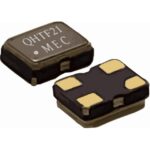 18QHTF21-12.365487-OE

The activity of extra discounts on wholesale prices is in full swing…
Please fill in your contact information and we will send you the latest wholesale price list.





