 ChipApex | Global Electronic Components Supplier

SEARCH
Search Product
Search Post
— IC芯片 | 连接器 | 传感器 | 被动器件 —
Search productSearch post
— IC芯片 | 连接器 | 传感器 | 被动器件 —
Consult the customer manager about the wholesale price.
consultation hotline:86-132-6715-2157
email:[email protected]
Contact the product manager for consultation. One-stop consultation is available.
Do you want a lower wholesale price? Please send us your inquiry and we will reply immediately.
The 18QHTF21-13.506-PD is a standard crystal oscillator (XO) manufactured by Mercury Electronics Ind. Co. Ltd. It operates at a frequency of 13.506 MHz with LVCMOS output logic and a supply voltage of 1.8V. The device features a standby (power down) function and is housed in a compact 4-SMD, No Lead package with dimensions of 2.0x1.6 mm. Key electrical parameters include a maximum supply current of 24mA, frequency stability of ±50ppm, and an operating temperature range of -40°C to 85°C. This surface-mount component is designed for applications requiring precise timing signals in space-constrained environments.
Verify the specific frequency tolerance and load capacitance requirements against your circuit design before ordering. Confirm that the 1.8V supply voltage aligns with your system's power rails. Ensure the 4-SMD no-lead footprint matches your PCB layout guidelines. Check for any specific reflow soldering profile recommendations provided by the manufacturer to ensure joint integrity. Validate that the operating temperature range meets your environmental specifications.
Choose this component when a small form factor and low power consumption are critical. The 1.8V supply voltage makes it suitable for modern low-voltage digital circuits. Consider the ±50ppm stability if your application does not require ultra-high precision timing. The integrated power-down feature is advantageous for battery-operated devices. Ensure compatibility with LVCMOS logic levels in your downstream circuitry.
This part belongs to the 18QHTF21 series of surface-mount crystal oscillators from Mercury Electronics. The series offers various frequencies and voltage options within a standardized 2.0x1.6 mm package. These oscillators are designed to replace larger through-hole components or older SMD packages in modern electronic designs. The 'PD' suffix indicates the inclusion of a power-down control pin for active management of power consumption.
Direct replacements must match the 1.8V supply, LVCMOS output, and 4-SMD no-lead package. Verify frequency accuracy and stability requirements against the original specification. Ensure the replacement part supports the same operating temperature range. Check pinout compatibility if the new component has different control pin configurations.
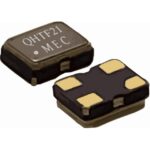 18QHTF21-13.506-PD

The activity of extra discounts on wholesale prices is in full swing…
Please fill in your contact information and we will send you the latest wholesale price list.





