 ChipApex | Global Electronic Components Supplier

SEARCH
Search Product
Search Post
— IC芯片 | 连接器 | 传感器 | 被动器件 —
Search productSearch post
— IC芯片 | 连接器 | 传感器 | 被动器件 —
Consult the customer manager about the wholesale price.
consultation hotline:86-132-6715-2157
email:[email protected]
Contact the product manager for consultation. One-stop consultation is available.
Do you want a lower wholesale price? Please send us your inquiry and we will reply immediately.
The 18QHTF21-58.200-PD is a standard crystal oscillator manufactured by Mercury Electronics Ind. Co. Ltd. It operates at a fixed frequency of 58.2 MHz and utilizes LVCMOS output logic for digital signal interfacing. The device is designed for low-power applications, featuring a supply voltage of 1.8V and an integrated standby or power-down mode to minimize energy consumption when inactive. The component is housed in a compact 4-SMD, no-lead package with dimensions of 2.0 x 1.6 mm, suitable for space-constrained surface-mount designs.
Verify the specific operating temperature range and load capacitance requirements against the target system design before procurement. Confirm that the 1.8V supply rail stability meets the oscillator's jitter specifications. Ensure the PCB footprint matches the 2.0x1.6mm SMD package dimensions precisely to avoid assembly defects. Cross-reference the datasheet for any specific handling or reflow soldering profile recommendations provided by the manufacturer.
Select this component when a precise 58.2 MHz timing reference is required with minimal power consumption. The LVCMOS output is suitable for standard digital logic families. Consider the 1.8V supply constraint and ensure the system architecture supports this voltage level. The small form factor makes it appropriate for dense circuit boards where space is limited compared to larger through-hole or standard SMD oscillators.
This part belongs to the Mercury Electronics 18QHTF series of surface-mount crystal oscillators. The series typically offers various frequencies and supply voltages within a standardized 2.0x1.6mm footprint. Mercury Electronics specializes in quartz crystals and timing solutions, providing components for industrial and consumer markets. This specific model represents a standard XO variant optimized for low-voltage digital applications.
Direct substitutes must match the 58.2 MHz frequency, 1.8V supply, LVCMOS output, and 2.0x1.6mm package. Verify pinout compatibility and electrical characteristics such as phase noise and duty cycle. Alternative models from other manufacturers require careful evaluation of thermal performance and startup time differences.
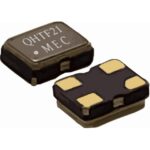 18QHTF21-58.200-PD

The activity of extra discounts on wholesale prices is in full swing…
Please fill in your contact information and we will send you the latest wholesale price list.





