 ChipApex | Global Electronic Components Supplier

SEARCH
Search Product
Search Post
— IC芯片 | 连接器 | 传感器 | 被动器件 —
Search productSearch post
— IC芯片 | 连接器 | 传感器 | 被动器件 —
Consult the customer manager about the wholesale price.
consultation hotline:86-132-6715-2157
email:[email protected]
Contact the product manager for consultation. One-stop consultation is available.
Do you want a lower wholesale price? Please send us your inquiry and we will reply immediately.
The 18QHTF21-58.372-OE is a crystal oscillator manufactured by Mercury Electronics Ind. Co. Ltd. It operates at a fundamental frequency of 58.372 MHz. The device utilizes a surface-mount technology (SMT) package, specifically the 18QHTF21 form factor, designed for integration into compact electronic circuits. This component provides stable clock signals required for digital systems, ensuring precise timing performance within specified operational temperature ranges as defined by the manufacturer's technical documentation.
Verify the exact part number against official Mercury Electronics documentation to ensure compatibility with your design requirements. Confirm that the operating voltage and load capacitance specifications match your circuit design before procurement. Check for any specific handling instructions related to the surface-mount package type to prevent damage during assembly. Ensure that the supplier provides genuine components with traceable origin to maintain quality standards.
Select this component when a fundamental frequency of 58.372 MHz is required in a compact SMT footprint. Consider the thermal characteristics and stability requirements of your application to ensure the oscillator meets performance needs. Evaluate the power consumption and drive level specifications to align with system constraints. Verify that the package dimensions fit within the available PCB space for optimal layout efficiency.
This crystal oscillator belongs to Mercury Electronics' range of timing devices, offering reliable performance for various electronic applications. The 18QHTF21 series is known for its compact size and suitability for high-density PCB designs. These components are engineered to meet industry standards for frequency stability and reliability, supporting diverse electronic products from consumer gadgets to industrial equipment.
Consult official Mercury Electronics substitution guides or authorized distributors for confirmed equivalent part numbers. Cross-reference electrical parameters such as frequency, load capacitance, and package dimensions to ensure functional compatibility. Verify that any substitute component meets the same environmental and performance specifications required by your design.
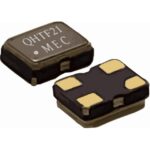 18QHTF21-58.372-OE

The activity of extra discounts on wholesale prices is in full swing…
Please fill in your contact information and we will send you the latest wholesale price list.





